
Choosing a Trail Motorcycle is less about chasing the biggest engine and more about finding a machine you can manage when the trail turns rocky, muddy, or unexpectedly steep. For global buyers, the decision also involves seat height, parts availability, service support, and whether the bike’s weight suits your riding experience. A polished showroom photo cannot answer every question.
Adventure-riding instructor Bret Tkacs offers a useful buying principle: “Choose for the terrain you ride, not the image you chase.” Treat that as a practical test, not a slogan. Picture your usual route: a narrow gravel lane, loose stones under the tires, perhaps a long ride back to town. Then compare engine size, suspension travel, ground clearance, fuel range, and maintenance needs. Ask a dealer about warranty coverage and local parts access. Those details can matter more than a dramatic power figure.
Fit matters. A rider should be able to balance the motorcycle confidently at a stop, especially on uneven ground. Take a test ride when possible, and notice how the bike feels at low speed, not only on smooth pavement. Used models may offer value, but inspect service records, tires, chain, and suspension carefully. Some buyers still prioritize appearance. Understandable, but not always wise. A lighter motorcycle may be less impressive on paper and far more enjoyable after an hour on rough ground. No checklist replaces a careful ride, and even experienced buyers can misjudge comfort. These ten tips help narrow the choice while leaving room for honest reflection.
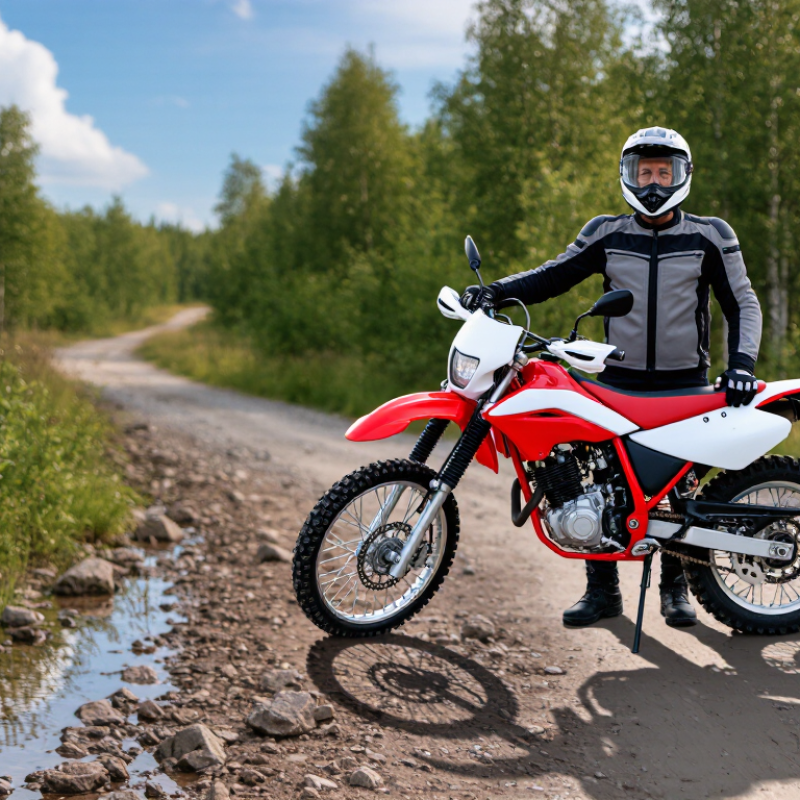
Before comparing engine sizes, picture a typical ride: packed forest road, loose gravel, muddy ruts, or narrow rocky climbs. Each surface asks something different from a motorcycle. Gravel rewards predictable throttle response and stable tires; tight, uneven trails make manageable weight and a comfortable standing position more valuable. Be specific. “Off-road” is not a terrain plan.
Check local route descriptions, seasonal closures, and typical ride length before choosing a machine. Then compare seat height, ground clearance, suspension travel, fuel range, and service needs against your own skills. A tall seat can feel fine in a showroom but awkward on a sloped trail. I would not assume a larger engine makes every ride easier; low-speed control matters more when rocks interrupt your line. Some uncertainty remains: trail surfaces can change after rain, so leave a margin in your choice.
Safety data also deserves context. NHTSA’s Traffic Safety Facts: Motorcycles, 2022 reports 6,218 motorcyclist deaths on U.S. roads that year. Those figures concern road traffic, not trail riding, but they underline why control and preparation matter. Choose protective gear suited to the conditions, and practice braking and turning on safe, familiar ground before tackling steep or loose sections. A good match feels calm, not merely powerful.
Compare how strongly each feature matters across common trail conditions. Scores are practical planning estimates on a 1–5 scale, not measured industry statistics.
Use the chart as a starting point: prioritize traction on mud and loose gravel, ground clearance on rocky trails, and fuel range for remote routes. Match the bike to your usual terrain and trip length.
Engine size is a starting point, not a verdict. A larger engine may offer stronger acceleration, but it can also feel tiring on narrow, technical trails. For mixed routes, consider how smoothly power arrives at low speeds. A predictable throttle helps when climbing loose gravel or easing around a tight bend. Check torque and gearing, too; displacement alone cannot tell you how manageable a motorcycle will feel.
Pay attention to weight, and confirm whether the listed figure is dry or ready to ride. Fuel, fluids, and luggage can change the feel noticeably. Imagine lifting the bike after a slow tip-over, or holding it upright on a sloped trail. Small details matter. Seat height and weight distribution can make a motorcycle feel lighter—or awkward—than its specifications suggest. Numbers can mislead.
Compare power with total riding weight, including your gear and typical luggage. More power is not always useful if it makes traction harder to control. If possible, test the motorcycle at walking pace, then on a safe climb and a rough patch. Notice how easily you can turn, stop, and regain balance. One imperfect test ride may not settle the choice, but it can reveal a poor fit. A sensible match is the bike you can handle calmly when the trail gets messy.
A trail motorcycle should fit your body before it impresses you on paper. Sit on it in your usual riding boots. Can both feet reach the ground comfortably? Check whether your knees feel cramped and your hands fall naturally on the controls. If possible, stand on the foot pegs and shift your weight. Small details matter. A bike that feels manageable in a showroom may feel very different on a rocky slope. It is easy to overvalue seat height numbers and overlook reach, balance, and fatigue.
Inspect safety equipment in person. Squeeze the brake levers and check that the controls are easy to use with gloved hands. Look for sound tires, clear lighting, sturdy hand guards, and well-protected cables. Anti-lock braking may help in some conditions, but it does not replace careful speed control or practice. Ask how the motorcycle has been maintained, and have a qualified mechanic inspect a used one. A shiny finish proves little.
Before buying, check the rules where you plan to ride. Licensing, registration, insurance, road-use approval, noise limits, and required lighting can differ between regions. Confirm details with the relevant transport authority or riding-area manager, rather than relying on a seller’s assumption. Also ask whether local trails permit motorized vehicles. A suitable bike is not useful if it cannot be registered or ridden on your intended routes.
A trail motorcycle can look sturdy in a showroom and still hide weak points. Inspect frame welds, fasteners, cable routing, and the underside of the engine. Look for scraped guards, pinched hoses, and connectors exposed to mud. Small details matter. A tidy finish is useful, but it cannot prove long-term durability; ask how the machine performs after repeated vibration and water exposure.
Parts access deserves the same scrutiny as suspension travel. Before buying, request prices and delivery estimates for wear items such as brake pads, levers, filters, and wheel bearings. Ask whether parts can be shipped to your country, and whether service instructions are available in a language you can use. Deloitte’s 2023 Global Automotive Consumer Study surveyed more than 26,000 consumers across 24 countries, underscoring how widely ownership expectations vary. It is a broad automotive study, not a motorcycle-specific parts survey, so use it as context—not proof of local availability.
After-sales support becomes tangible when a fault appears far from home. Get warranty terms in writing, including coverage across borders and who pays for transport or labor. Check whether local mechanics can obtain diagnostic information and replacement parts. Call the service contact before purchase; note how clearly they answer. This check is imperfect. A helpful phone call does not guarantee fast repairs, but silence is a warning worth taking seriously.
A trail motorcycle’s advertised price is only the starting point. Build a landed-cost sheet: purchase price, dealer preparation, crating, inland haulage, freight, cargo insurance, port handling, destination duties and taxes, registration, and delivery to your door. Ask for written quotes with the same delivery terms. Small charges add up. A low freight quote may exclude terminal fees or final-mile transport.
Freight rates can shift sharply. UNCTAD’s Review of Maritime Transport 2024 reported that the Shanghai Containerized Freight Index rose 122% between December 2023 and June 2024. That index tracks container routes, not motorcycle shipments, but it shows why an old estimate can mislead. Confirm the quote’s validity period, currency, and included services before paying. Leave a contingency for exchange-rate movement and storage if paperwork or collection is delayed.
Ownership costs deserve their own column. Estimate annual insurance, scheduled servicing, tires, chain and brake wear, fuel, and secure storage; ask a local workshop for labor rates and parts availability. Use the owner’s manual service schedule, then get an insurance quote using the exact engine size and riding location. A spreadsheet helps, though estimates are not promises. Recheck them before committing.
Use these planning ranges to estimate the purchase, import, setup, and first-year ownership costs of a new mid-size trail motorcycle. Amounts are indicative USD estimates; local prices, taxes, rules, and exchange rates vary.
| # | Buying Tip | What to Check | Typical Planning Estimate (USD) | Buyer Action |
|---|---|---|---|---|
| 1 | Set a realistic purchase budget | Compare the motorcycle’s new purchase price with the cost of comparable models in your destination market. Confirm what is included, such as taxes, freight to the seller, and standard equipment. | $4,000–$10,000 for a new mid-size trail motorcycle | Get a written quotation showing the vehicle price and every charge before payment. |
| 2 | Check export paperwork and vehicle eligibility | Confirm that the seller can provide an original invoice, proof of ownership, export documents, and the required vehicle identification details. Check whether the destination accepts the motorcycle’s emissions and safety specification. | $50–$300 for document preparation or certification; requirements vary | Ask the destination customs and transport authorities which documents and technical standards apply. |
| 3 | Compare shipping methods | Obtain a quote that states the shipping method, packing or crating, port handling, delivery point, and what is excluded. Motorcycle freight is affected by route, dimensions, season, and service level. | $500–$1,500 for international freight and routine handling | Compare at least two complete, door-to-port or door-to-door quotations on the same basis. |
| 4 | Insure the shipment | Check whether cargo insurance covers the motorcycle’s full declared value during loading, transit, and unloading. Review deductibles and exclusions, including damage to inadequately packed cargo. | $50–$250, or roughly 1%–3% of the insured value | Request the policy terms and a written statement of the insured amount before the motorcycle ships. |
| 5 | Estimate customs duty and import tax | Duty and tax depend on destination rules, engine category, origin, customs valuation, and applicable trade arrangements. Tax may be calculated on a base that includes freight, insurance, duty, or other charges. | Duty may be 0%–20% or more; VAT/GST commonly varies by country, often around 5%–25% | Use the destination country’s official tariff guidance or a licensed customs professional; do not assume a universal rate. |
| 6 | Budget for customs clearance and port charges | Potential charges include customs-agent services, terminal handling, storage, inspections, and documentation fees. Storage can rise if paperwork or payment is delayed. | $100–$500 for routine clearance and handling; storage may be extra | Ask for an itemized destination-charge estimate and confirm free-storage deadlines. |
| 7 | Include inland delivery and registration | Plan for transport from the arrival point to your address, plus registration, plates, inspection, and any local road-use fees. Costs depend on distance and local procedures. | $100–$700 for inland delivery; $50–$500 for registration and inspection | Check whether the motorcycle can be ridden on arrival or must be transported until registered. |
| 8 | Allow for compliance changes and riding gear | Local requirements may require lighting, reflectors, emissions checks, or other modifications. Include a properly fitting helmet, protective clothing, gloves, boots, and basic security equipment. | $0–$800 for compliance work; $300–$1,000 for essential gear | Verify road legality before purchase and avoid budgeting only for the motorcycle itself. |
| 9 | Estimate first-year running costs | Include local insurance, scheduled servicing, wear items, fuel, and storage. Actual fuel cost depends on distance ridden, fuel consumption, and local prices. | $150–$700 insurance; $150–$500 maintenance; fuel varies by use | Check service intervals, parts availability, insurance requirements, and your expected annual mileage. |
| 10 | Calculate the landed and first-year total | Add the purchase price, freight, insurance, duty, import tax, clearance, inland delivery, compliance, registration, gear, insurance, maintenance, and fuel. Keep a contingency for exchange-rate changes and unexpected fees. | A sample first-year total is shown below; the result changes substantially by destination | Compare the full imported cost with a locally available equivalent before placing an order. |
Planning note: All figures are illustrative budget ranges, not quotations or guaranteed prices. Confirm current rates, import eligibility, tax calculations, and registration requirements with the relevant authorities in the destination country before purchase.