background

Blog

Top Wall Box Charger Suppliers for Global Buyers?

Choosing the right Wall Box Charger supplier is not simply a price comparison. Global buyers must examine safety, compatibility, production capacity, and after-sales support.

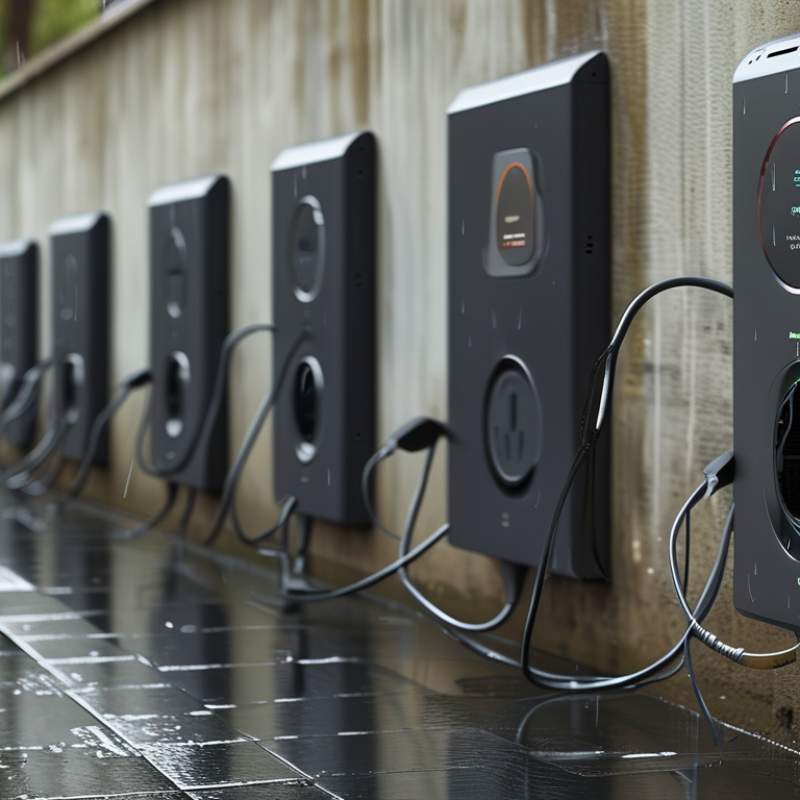
Enric Asunción, co-founder and CEO of Wallbox, has described the market direction clearly: “The future of mobility is electric, and the future of energy is distributed.” His observation matters because modern charging equipment increasingly connects vehicles, homes, solar systems, and energy-management platforms. A reliable supplier should demonstrate experience with regional voltage requirements, connector standards, network software, weather protection, and load balancing. These details become visible in practice: a charger installed beside a rainy driveway faces different demands from one used in a dry indoor parking garage.

Certification documents are important. They are not enough.

Buyers should also request factory audit records, product testing evidence, warranty terms, spare-parts plans, and installer training procedures. Field experience can reveal weaknesses that brochures hide, including unstable mobile applications, unclear fault codes, or slow technical responses. Supplier references from similar markets provide stronger evidence than impressive claims alone. A careful evaluation should compare delivery timelines, minimum order quantities, customization limits, and cybersecurity controls.

No supplier is perfect. That deserves attention.

Some buyers may focus too heavily on output power while overlooking installation constraints or grid limitations. Others may accept attractive samples without testing long-term software support. This outline examines leading Wall Box Charger suppliers for global buyers, emphasizing verifiable performance, transparent communication, and practical ownership costs. The goal is not to promote the loudest brand, but to identify dependable partners for different charging environments.

Top Wall Box Charger Suppliers for Global Buyers?

What Wall Box Chargers Are and Why Global Buyers Need Them

Top Wall Box Charger Suppliers for Global Buyers?

Wall box chargers are fixed AC charging units installed on walls, garages, workplaces, and apartment parking areas. They usually deliver between 3.7 and 22 kilowatts. Their actual output depends on the vehicle, wiring, and local grid capacity. Unlike a basic portable cable, a wall box can include residual-current protection, scheduled charging, energy monitoring, and load balancing. It turns a parking space into a practical charging point.

The International Energy Agency’s Global EV Outlook 2024 reported more than 14 million electric cars sold worldwide in 2023. The same report recorded over four million public charging points globally. This growth increases demand for dependable private charging equipment. Global buyers need suppliers that understand connector standards, voltage differences, weather protection, software compatibility, and installation conditions. A charger designed for one market may perform poorly elsewhere. Check certifications and testing records carefully.

Power ratings can mislead buyers. A 22-kilowatt label does not guarantee 22 kilowatts at every site. Some vehicles accept less, while older buildings may lack sufficient capacity. That detail matters. Procurement teams should request clear efficiency data, warranty terms, remote-support procedures, and replacement-part availability. The International Electrotechnical Commission also stresses safety requirements for conductive charging systems. In practice, the best supplier is not always the cheapest. Cost comparisons should include installation, network fees, maintenance, and downtime. I would still question optimistic lifetime claims without independent test evidence.

Top Wall Box Charger Suppliers for Global Buyers? - What Wall Box Chargers Are and Why Global Buyers Need Them

Evaluation Dimension Typical Wall Box Charger Data Why It Matters to Global Buyers Recommended Procurement Check
Product definition A wall-mounted AC electric-vehicle supply equipment unit that delivers electricity from a building circuit to an EV. It provides a practical charging solution for homes, workplaces, apartments, hotels, and commercial parking areas. Confirm whether the product is a complete EVSE unit or only a cable, socket, or control module.
Charging type AC Level 2 / Mode 3 charging is the most common category for wall box installations. AC wall boxes are generally more suitable for overnight, workplace, and long-dwell charging than high-power DC chargers. Request charging-mode documentation and confirm compatibility with the target vehicle market.
Rated power range Common residential and light-commercial ratings range from approximately 3.7 kW to 22 kW. The available power determines charging speed and affects circuit design, installation cost, and site capacity. Match the output rating with local grid capacity, vehicle onboard-charger limits, and electrical regulations.
Electrical input Single-phase input is commonly used for lower-power installations; three-phase input supports higher ratings such as 11 kW or 22 kW in compatible markets. Electrical systems differ by country, building type, voltage, frequency, and phase availability. Verify nominal voltage, frequency, phase configuration, current rating, and neutral or earth requirements.
Connector and cable options Common AC interfaces include Type 1, Type 2, and regional socket variants; tethered and socketed designs are available. Connector selection must reflect vehicle fleets and regulatory requirements in the destination market. Specify connector type, cable length, cable temperature rating, locking method, and replacement availability.
Communication features Basic models may operate offline; connected models can use Wi-Fi, Ethernet, Bluetooth, cellular connectivity, or OCPP-based backend communication. Connectivity enables monitoring, access control, remote diagnostics, firmware updates, and usage reporting. Check supported protocols, cybersecurity controls, API access, SIM requirements, and software ownership terms.
Load management Available functions may include dynamic load balancing, scheduled charging, solar integration, and multi-charger power sharing. Load management can reduce peak demand and help avoid costly electrical upgrades at constrained sites. Ask for control logic, measurement accuracy, response time, and compatibility with energy-management systems.
Protection and safety Typical functions include overcurrent, overvoltage, residual-current, over-temperature, surge, short-circuit, and protective-earth monitoring. Protection features reduce electrical and operational risks for users, vehicles, buildings, and installation personnel. Review the protection specification, test method, trip thresholds, reset behavior, and installation instructions.
Ingress protection Outdoor wall boxes are commonly offered with ratings such as IP54, IP55, or IP65, depending on product design and certification. Higher environmental protection is important for rain, dust, temperature changes, and exposed parking locations. Confirm the certified rating applies to the complete installed product, including cable entry and socket covers.
Operating environment Many products are designed for outdoor and indoor use across a broad temperature range, commonly around -30°C to +50°C, subject to derating. Climate conditions can affect charging power, enclosure durability, display performance, and long-term reliability. Request the tested temperature range, humidity limits, altitude limits, UV resistance, and power derating curve.
User authorization Possible methods include plug-and-charge, RFID cards, PIN access, mobile applications, and backend authorization. Different sites require different access models, from private home use to shared commercial charging. Confirm offline authorization, user limits, data privacy, card standards, and administrator controls.
Metering and billing Some units include energy metering, while commercial models may support certified meters and transaction records. Accurate energy data is necessary for tenant reimbursement, fleet accounting, and public or workplace billing. Check meter accuracy class, certification requirements, data export, tariff support, and audit trails.
Compliance documentation Relevant requirements may include IEC 61851, IEC 62196, IEC 60364-7-722, regional electrical rules, EMC requirements, and product safety legislation. Compliance evidence supports customs clearance, installation approval, insurance, tender participation, and market access. Request declarations, test reports, certificates, user manuals, wiring diagrams, and destination-market approvals.
Installation requirements Installation normally requires a suitable protective device, correctly sized conductors, proper earthing, and qualified electrical work. Installation conditions influence total cost, commissioning time, safety, and warranty validity. Obtain mounting drawings, cable specifications, breaker guidance, commissioning procedures, and installer training materials.
Warranty and after-sales support Commercial warranty periods commonly range from one to several years, depending on the supplier and contract. Long-term support is essential for distributed installations and reduces downtime-related costs. Evaluate warranty scope, spare-parts availability, response times, repair locations, software support, and RMA procedures.
Supply and customization capability Potential options include private labeling, enclosure color, cable configuration, firmware settings, packaging, and regional plug or connector variants. Flexible supply capability helps buyers meet local regulations, fleet requirements, deployment standards, and project branding rules without relying on brand-specific data. Confirm minimum order quantity, production capacity, lead time, sample policy, change-control process, and continuity-of-supply plan.

Note: Actual electrical ratings, connector availability, certifications, environmental limits, and software functions vary by model and destination market. Buyers should verify current technical documents and local installation regulations before purchase.

How to Assess Wall Box Charger Suppliers Worldwide

Choosing wall box charger suppliers worldwide requires more than comparing price lists. The International Energy Agency’s Global EV Outlook 2024 reported nearly 14 million electric car sales in 2023. It also recorded more than four million public charging points globally. Demand is rising quickly. Supplier capacity, however, can be harder to verify.

Ask for independent test reports covering IEC 61851, IEC 62196, electrical safety, and electromagnetic compatibility. Check whether production units match the tested models. Request serialised quality records, warranty terms, and failure-rate data from installed projects. A polished brochure is not proof. I would inspect at least three operating sites, preferably in different climates. Heat, dust, freezing weather, and unstable grids reveal weaknesses that factory demonstrations may hide.

Software deserves equal attention. The charger should support secure updates, user access control, load balancing, and transparent data ownership. The European Alternative Fuels Observatory reported continued rapid growth in public charging infrastructure across Europe during 2023, increasing pressure on uptime and maintenance networks. Ask suppliers for response times, spare-parts locations, and monthly uptime calculations. A low purchase price may become expensive after repeated service visits. Also compare energy metering accuracy and integration with local payment systems. Some supplier claims remain vague. That is a warning, not a minor detail.

Leading Supplier Types and Their Market Strengths

Top Wall Box Charger Suppliers for Global Buyers

Leading Supplier Types and Their Market Strengths

Wall box charger suppliers generally fall into four groups: dedicated charging manufacturers, electrical equipment distributors, contract producers, and energy-management specialists. Dedicated manufacturers often provide stronger testing, firmware control, and installation documents. Distributors offer wider regional stock and faster replacement support. Contract producers can reduce unit costs, but their quality may vary between batches. Energy-management specialists stand out when buyers need solar coordination, load balancing, or fleet monitoring.

Demand is expanding quickly. The International Energy Agency’s Global EV Outlook 2024 reported nearly 14 million electric car sales in 2023. It also estimated more than four million public charging points worldwide. This growth increases demand for reliable home and workplace wall boxes. Buyers should check output stability, temperature protection, IP ratings, connector compatibility, and software access. A low purchase price can become expensive when spare parts arrive slowly. That lesson is easy to miss.

Tips: Request samples from at least two supplier types. Test a charger during peak household demand. Ask for a three-year component availability statement. Verify certifications for each target market, not just the factory’s home market. BloombergNEF’s Electric Vehicle Outlook 2024 also highlights uneven charging development across regions. Therefore, suppliers with local service partners may outperform cheaper exporters. Still, service claims should be measured, not trusted blindly. A polished website proves very little.

Comparing Products, Certifications, Pricing, and Customization

Top Wall Box Charger Suppliers for Global Buyers?

Product comparison should begin with electrical fit, not catalogue photos. The IEA’s Global EV Outlook 2024 reports more than 14 million electric cars sold in 2023. It also estimates that global public charging capacity may need to expand nearly sixfold by 2035. Buyers should therefore check output levels, load balancing, connector standards, weather protection, and software compatibility. Certification evidence matters. Look for IEC 61851 and IEC 62196 compliance, relevant regional safety marks, EMC test reports, and ISO 15118 readiness when smart charging is required. A certificate number alone is insufficient. Verify its scope and issuing laboratory.

Pricing usually reflects more than the charger itself. A basic 7.4 kW unit may cost roughly 300 to 700 US dollars before installation. Connected models can exceed 1,000 dollars, while installation, permits, and electrical upgrades often change the final budget. Cheap is not always cheap. Customization may include cable length, enclosure color, logo placement, RFID access, payment systems, cellular communication, and fleet-management APIs. However, every modification can increase testing time, minimum order quantities, and support risks. No comparison is perfect.

Tips: Request a sample before a large order. Test charging under low voltage, weak connectivity, and high ambient heat. Ask for a three-year spare-parts plan, firmware policy, warranty exclusions, and response times. Compare delivered cost, not factory price. Measure twice.

How Global Buyers Can Choose and Work With the Right Supplier

Global buyers should evaluate wall box charger suppliers beyond price. Start with the charger’s power rating, connector type, enclosure protection, and installation method. Ask for test reports, safety certifications, and traceable production records. Documents should match the exact model, not a similar product.

Request a sample before signing a large order. Test charging stability, cable temperature, display accuracy, and performance during voltage changes. A practical factory review can reveal more than polished sales materials. Check assembly areas, quality checkpoints, spare-part storage, and packaging protection. It is easy to overlook packaging until damaged units arrive.

Clear communication matters across time zones. Confirm minimum order quantities, lead times, payment terms, shipping responsibilities, warranty coverage, and software support in writing. Define who handles installation questions and replacement parts. A reliable supplier should explain technical limits honestly, even when the answer may reduce the sale. Buyers should also compare response times during a small pilot order. Fast replies are useful, but detailed replies are better.

Do not depend on one promising conversation. Keep a record of revisions, approvals, and inspection results. Some buyers make the mistake of accepting a broad warranty with unclear exclusions. That can become expensive later. A staged order may feel slower, yet it gives both sides room to correct packaging, documentation, or firmware issues before wider distribution. Supplier cooperation during these small problems often shows more than a perfect first quotation.

Top Wall Box Charger Suppliers for Global Buyers

Comparing Common AC Wallbox Power Levels

Charging power is a practical starting point when evaluating wallbox suppliers. The chart compares common AC power ratings and the ideal charging time for a 60 kWh battery. Actual charging time may be longer because of vehicle limits, charging losses, temperature, and battery-management controls. Buyers should also verify regional certification, connector compatibility, installation requirements, warranty coverage, and after-sales support.

Calculation basis: ideal charging time = 60 kWh ÷ rated charging power. Power levels are commonly used AC wallbox ratings in international residential and commercial charging applications.