
Blog
Top 10 Throttle Pedal Sensor Manufacturers Worldwide?
A Throttle Pedal Sensor converts driver input into a precise electrical signal for the vehicle’s electronic control system. Its response affects acceleration, fuel management, transmission behavior, and driving confidence. Even a small signal inconsistency can create hesitation, warning lights, or reduced-power operation.
This guide examines ten leading Throttle Pedal Sensor manufacturers serving global automotive markets. The review considers engineering experience, production capacity, sensor accuracy, connector quality, environmental resistance, and aftermarket support. Practical details matter. A reliable unit should withstand vibration, temperature changes, moisture, and repeated pedal movement inside a demanding cabin environment.
Manufacturer reputation alone is not enough. OEM approvals, traceable testing, quality certifications, and field performance provide stronger evidence. Product documentation also deserves attention, especially when vehicles use different voltage ranges, mounting designs, or communication protocols. Some suppliers publish extensive test data, while others provide limited technical information. That difference can affect purchasing confidence.
No worldwide ranking is perfectly objective. Availability varies by region, vehicle platform, and distributor support. Pricing can also change quickly. This article therefore uses transparent criteria rather than relying only on brand recognition. It highlights companies with meaningful technical capability, consistent manufacturing practices, and relevant market presence.
Real-world fit matters.
Readers should verify specifications before selecting a component. Part numbers, connector layouts, calibration requirements, and vehicle compatibility must match precisely. A sensor that appears identical may still produce unsuitable signals. That is an easy detail to overlook. The following manufacturers represent strong candidates, although continued testing and independent verification remain necessary.
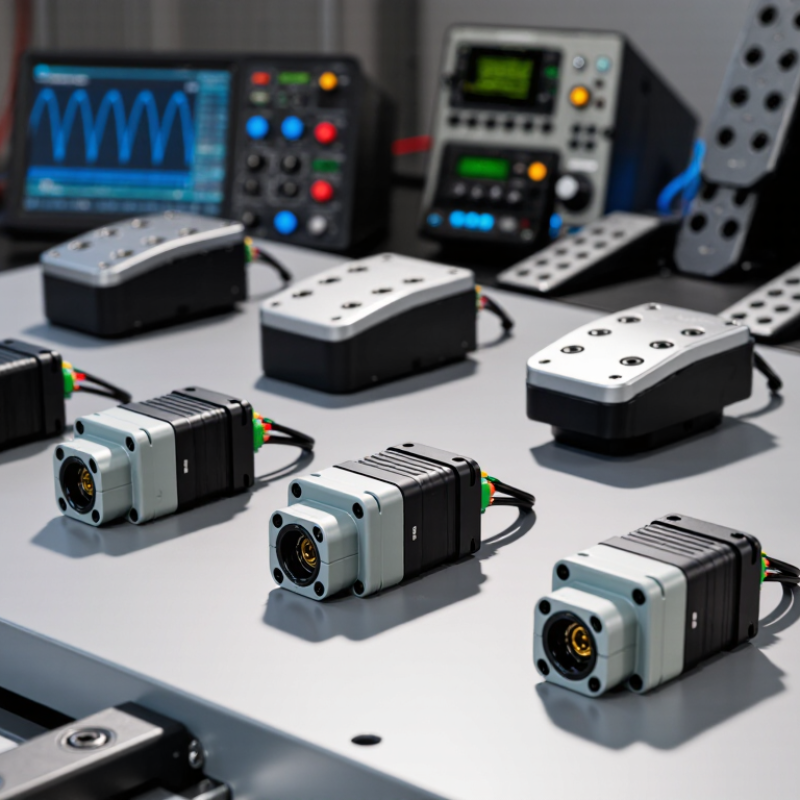
What Is a Throttle Pedal Sensor and How Does It Work?
A throttle pedal sensor is an electronic measuring device in a vehicle’s accelerator assembly. It detects how far and how quickly the driver presses the pedal. The sensor sends this information to the engine control unit through an electrical signal. It usually uses dual circuits for safer, more accurate readings. The pedal itself may feel mechanical, but the engine response is electronic. Small movement matters.
When the driver presses the pedal, an internal position element changes its voltage output. The engine control unit reads this changing voltage and calculates the requested torque. It then adjusts throttle opening, fuel delivery, ignition timing, and transmission behavior. Modern systems compare two sensor signals continuously. Their values should follow a predictable relationship. Redundancy is essential. If the signals disagree, the vehicle may limit power and activate a warning light. This protective mode can feel sudden, especially during overtaking.
In workshop diagnostics, technicians check live sensor data rather than relying only on fault codes. A smooth voltage increase is normally expected as the pedal moves slowly. Sudden jumps, dead zones, or inconsistent readings may indicate wear, wiring damage, connector corrosion, or poor calibration. Do not assume the sensor is always at fault. Battery voltage, grounding, and control-unit software can create similar symptoms. The system is not flawless. Even a clean-looking connector may hide moisture beneath its seal. Careful testing, manufacturer specifications, and a road test under controlled conditions provide more reliable evidence than guesswork.
Top 10 Throttle Pedal Sensor Manufacturers Worldwide? - What Is a Throttle Pedal Sensor and How Does It Work?
| No. | Common Sensor Configuration | Sensing Principle | Typical Electrical Output | Redundancy Arrangement | Typical Supply | Typical Vehicle Application | Main Advantages |
|---|---|---|---|---|---|---|---|
| 1 | Dual Hall-Effect Pedal Sensor | A magnetic field changes as the pedal shaft rotates, and Hall elements convert the position into voltage signals. | Usually two analog voltage channels; 0.5–4.5 V ranges are common but vehicle-dependent. | Two independent channels with different slopes or signal ranges. | Commonly a regulated 5 V reference. | Passenger cars, hybrids, and electric vehicles. | Non-contact operation, low wear, good repeatability, and strong diagnostic capability. |
| 2 | Dual Potentiometric Pedal Sensor | A wiper moves across resistive tracks and produces a variable voltage proportional to pedal travel. | Two analog voltage outputs, often designed with dissimilar voltage curves. | Redundant tracks monitor plausibility and detect disagreement. | Typically 5 V, depending on the engine control system. | Older electronic throttle systems and selected commercial vehicles. | Simple signal processing, established design, and relatively low electronics complexity. |
| 3 | Non-Contact Magnetic Angle Sensor | A magnet and integrated magnetic sensing element measure the angular position of the pedal shaft. | Analog voltage, PWM, or digital position data, depending on the interface. | Dual sensing elements or dual processed outputs are common for safety monitoring. | Usually 5 V; some modules support wider automotive voltage ranges internally. | Modern drive-by-wire systems and electrified powertrains. | No sliding contacts, improved durability, and resistance to mechanical wear. |
| 4 | PWM-Output Pedal Module | The sensor converts pedal position into a pulse-width-modulated duty cycle. | Digital PWM signal; duty-cycle limits are defined by the vehicle controller. | Often uses two channels or an additional diagnostic signal. | Commonly 5 V or vehicle-module regulated power. | Commercial vehicles, industrial vehicles, and specialized control systems. | Better noise immunity over long wiring distances and straightforward digital validation. |
| 5 | CAN-Bus Pedal Sensor Module | Internal magnetic or resistive sensing is processed by electronics and transmitted over a CAN network. | Digital CAN messages containing position and diagnostic information. | Redundant position channels are usually monitored inside the module. | Vehicle battery supply with internal regulation. | Electric buses, trucks, off-highway equipment, and advanced EV platforms. | Reduced analog wiring and integrated fault reporting. |
| 6 | Contactless Dual-Track Pedal Assembly | Two separate sensing tracks measure the same pedal movement without direct electrical contact. | Two analog channels with predefined correlation limits. | Independent tracks provide plausibility and open-circuit detection. | Generally a 5 V reference and sensor ground. | Safety-focused passenger vehicle throttle systems. | Supports fail-safe control strategies and helps prevent unintended acceleration. |
| 7 | Heavy-Duty Hall Pedal Sensor | A sealed Hall-effect assembly detects pedal rotation in demanding operating environments. | Analog, PWM, or network-compatible output depending on the vehicle architecture. | Dual outputs are widely used for engine and transmission control safety. | Vehicle electrical supply with protected internal circuitry. | Trucks, buses, agricultural machinery, and construction equipment. | High resistance to vibration, dust, moisture, and extended service cycles. |
| 8 | EV Accelerator Pedal Position Sensor | Pedal displacement is detected electronically and interpreted by the inverter or vehicle control unit. | Usually redundant analog signals or a digital vehicle-network message. | Two-channel monitoring is used to support functional safety. | Typically low-voltage regulated sensor power. | Battery electric vehicles, plug-in hybrids, and fuel-cell vehicles. | Smooth torque demand, fast response, and compatibility with regenerative braking control. |
| 9 | Rugged Sealed Pedal Position Sensor | A sealed sensing unit measures pedal angle while protecting the electronics from external contaminants. | Analog or PWM output with a defined inactive and full-travel range. | Dual-channel architecture is typical in safety-related applications. | Commonly powered from a regulated 5 V circuit. | Marine, recreational, utility, and off-road vehicles. | Improved sealing, corrosion resistance, and reliability in harsh conditions. |
| 10 | Integrated Pedal Sensor with Diagnostics | A sensing element and signal-conditioning circuit provide position data while checking supply, output, and plausibility faults. | Redundant analog channels, PWM, or digital data with diagnostic status. | Independent channels plus internal range, correlation, and fault monitoring. | Vehicle-regulated supply with reverse-polarity and transient protection. | Advanced engine management and safety-critical drive-by-wire systems. | Simplifies fault detection and supports limp-home or torque-reduction strategies. |