
background

Blog

Best Cement Plant Manufacturers in China for Global Buyers

Choosing the right Cement Plant manufacturer in China requires more than comparing prices and production capacity. Global buyers must examine engineering experience, product consistency, export performance, and long-term support. A reliable supplier should explain each stage clearly, from limestone crushing to clinker cooling and cement packing.

This guide introduces leading Chinese Cement Plant manufacturers for international projects. It considers kiln systems, grinding mills, dust-control equipment, automation, and energy efficiency. It also reviews practical details, such as factory inspections, technical drawings, spare-parts planning, and commissioning support. These factors often influence project results more than a polished sales presentation.

Details matter.

Experienced manufacturers usually provide project references, equipment specifications, quality records, and evidence of completed installations. Buyers should request verifiable information and speak with previous customers when possible. Certificates can support credibility, but they should never replace technical evaluation or on-site inspection. A supplier may offer an attractive quotation, yet unclear warranty terms can create expensive problems later.

No single manufacturer fits every market. Local fuel quality, raw material conditions, climate, grid stability, and environmental requirements can change the best design. Even a well-known company may need stronger communication or better regional service. That limitation deserves attention. Claims need testing.

By comparing technical capability, delivery discipline, after-sales resources, and documented experience, buyers can build a more dependable shortlist. The goal is not merely to purchase equipment. It is to develop a stable, efficient, and maintainable production system with realistic expectations.
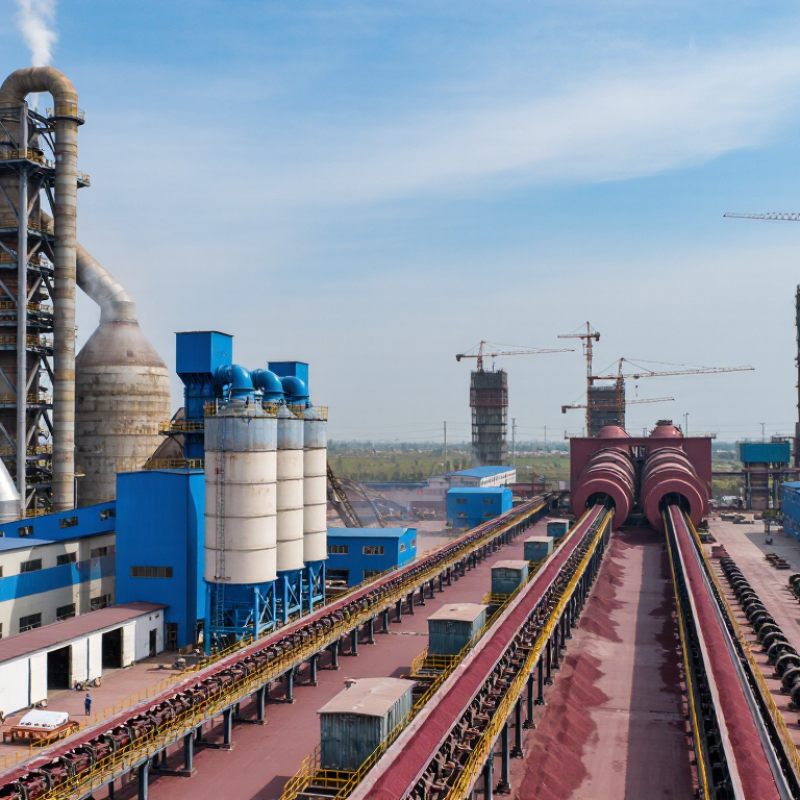
Best Cement Plant Manufacturers in China for Global Buyers

China’s Role in the Global Cement Plant Manufacturing Industry

China has become a major force in the global cement plant manufacturing industry. Its manufacturers supply rotary kilns, grinding mills, conveyors, dust collectors, and automated control systems. Many facilities serve projects across Asia, Africa, the Middle East, and Latin America.

Their advantage comes from integrated production and extensive project experience. A single engineering team may handle process design, equipment fabrication, installation, and commissioning. In real projects, small details matter. Steel thickness, refractory quality, motor alignment, and dust control can affect years of operation. Reliable suppliers usually provide test records, material certificates, inspection plans, and performance data. Factory visits can reveal more than polished brochures.

Cost remains important, but the lowest quotation can create expensive delays. Buyers should check local limestone quality, fuel conditions, grid stability, and maintenance skills before selecting equipment. A plant designed for one region may perform poorly elsewhere. Remote commissioning is now common. Still, communication gaps can complicate troubleshooting. Clear drawings, bilingual manuals, spare-parts lists, and response schedules reduce that risk.

China’s role is not flawless. Some suppliers differ greatly in engineering depth and after-sales discipline. Buyers need independent inspections and carefully defined acceptance standards. Experienced project teams often compare actual references, not only promised capacity. A well-designed 5,000-ton-per-day line depends on coordinated engineering, not equipment size alone.

Key Capabilities of Leading Chinese Cement Plant Manufacturers

Leading Chinese cement plant manufacturers typically combine process engineering, equipment fabrication, and international project management. Their teams assess limestone chemistry, quarry conditions, fuel availability, and local climate before sizing the production line. That groundwork matters. Laboratory testing can reveal moisture variation, abrasive minerals, or unexpected alkali levels. These findings influence crusher selection, raw mill design, kiln configuration, and dust-control equipment. Experienced suppliers also provide heat-balance calculations and estimated power consumption. Figures should be checked against site data.

Strong manufacturers offer complete lines, from material handling and proportioning to clinker cooling, cement grinding, packing, and dispatch. They use PLC or DCS control systems, online monitoring, and alarm records to support stable operation. Fabrication quality is visible in plate thickness, weld inspection, bearing protection, and spare-parts traceability. Independent inspections and factory acceptance tests can reduce uncertainty before shipment. Installation support may include civil drawings, supervisor visits, operator training, and commissioning assistance. Practical suppliers explain maintenance intervals in clear language. That detail saves downtime.

Global buyers should request references for plants with similar capacity and raw materials, not merely impressive brochures. Contracts should define performance tests, delivery milestones, warranty scope, and response times for technical issues. Energy guarantees need careful review, because operating conditions rarely match laboratory assumptions. Some proposals look efficient on paper. Real performance may change with fuel quality, operator skill, or seasonal humidity. Open technical discussions often reveal whether a manufacturer can adapt responsibly when the original plan proves imperfect.

Typical Clinker Line Capacities Offered by Leading Chinese Cement Plant Manufacturers

Modern Chinese EPC suppliers commonly design and export complete dry-process cement production lines across these nominal capacity ranges. Larger lines generally require greater equipment scale, automation integration, and infrastructure capacity.

Indicative industry-standard rotary-kiln clinker line configurations used in international cement EPC projects; actual specifications vary by raw materials, fuel, local regulations, and plant design.

How Chinese Cement Plant Manufacturers Serve International Buyers

Chinese cement plant manufacturers serve international buyers through scale, engineering depth, and adaptable project support. The U.S. Geological Survey estimated China produced about 2.1 billion metric tons of cement in 2023. That volume supports mature equipment supply chains and experienced process engineers. Export projects often include crushing, grinding, kiln systems, dust control, automation, and laboratory equipment. Buyers can request plant layouts, energy calculations, and capacity simulations before signing.

Documentation matters greatly. Manufacturers commonly provide drawings, equipment lists, inspection plans, installation guides, and spare-parts schedules. Factory acceptance testing can check motor performance, temperature readings, vibration, and control-system signals. The UNCTAD Review of Maritime Transport reports that more than 80% of global merchandise trade by volume moves by sea. Therefore, export packing and shipment planning are practical engineering concerns, not minor services. Moisture protection, lifting marks, and container dimensions can prevent costly delays at the receiving port.

Compliance requires careful review. International buyers may need equipment aligned with ISO, EN, ASTM, or local safety requirements. The Global Cement and Concrete Association identifies cement and concrete as contributing roughly 7% of global carbon dioxide emissions. Energy-efficient grinding, waste-heat recovery, and alternative-fuel readiness are increasingly important. Yet some proposals still promise unrealistic fuel savings. That deserves skepticism. Site conditions, raw-material chemistry, operator skills, and grid stability can change final performance. Experienced buyers should request verified references, performance guarantees, inspection access, and clear commissioning responsibilities. Remote support helps, but local technicians remain essential.

Best Cement Plant Manufacturers in China for Global Buyers - How Chinese Cement Plant Manufacturers Serve International Buyers

Non-branded reference table for evaluating Chinese cement plant suppliers, engineering contractors, and complete-line equipment manufacturers serving international projects.

Supplier Capability Profile Typical Clinker Capacity Typical Cement Production Process and Core Equipment International Buyer Application Export Service Scope Common Technical Standards Key Due-Diligence Items
Compact modular cement line 500–1,500 t/day

Suitable for phased investment and regional markets.
Approximately 0.15–0.50 million tonnes per year, depending on operating days and product mix.
  • Vertical or compact raw-material grinding
  • Small rotary kiln and preheater system
  • Ball mill or vertical cement mill
  • Bag filters, conveyors, silos, and packing equipment
Remote regions, island markets, infrastructure projects, and countries with moderate local demand.
  • Equipment supply or partial EPC package
  • Process design and layout support
  • Remote commissioning assistance
  • Operator training documentation
Project specifications may reference GB/T cement standards, ASTM requirements, EN 197-1, or local national standards. Verify raw-material test results, fuel consumption, spare-parts availability, local installation support, and actual reference projects of similar size.
Medium-scale preheater kiln line 2,500–3,500 t/day

A common configuration for regional commercial cement plants.
Approximately 0.75–1.15 million tonnes per year, depending on plant utilization and maintenance schedule.
  • Five-stage or comparable preheater system
  • Precalciner and rotary kiln
  • Raw mill, coal or alternative-fuel system
  • Clinker cooler and cement grinding system
  • Electrostatic precipitators or bag filters
National construction-material markets, major urban expansion, road projects, and general-purpose Portland cement production.
  • Engineering, procurement, and construction support
  • Mechanical and electrical integration
  • Performance testing and commissioning
  • Spare-parts and maintenance planning
Typical cement products may be designed around ASTM C150, EN 197-1, or equivalent local specifications; plant machinery commonly follows ISO-based quality systems and applicable electrical codes. Request guaranteed heat consumption, production capacity, emission limits, equipment efficiency data, warranty terms, and a clear battery-limit definition.
Large integrated cement plant EPC package 5,000 t/day

A widely used benchmark for modern integrated plants.
Approximately 1.50–1.80 million tonnes per year at a high utilization rate.
  • Multi-stage preheater and precalciner
  • Large rotary kiln and high-efficiency clinker cooler
  • Vertical raw mill and cement grinding mills
  • Automated batching, conveying, and packing systems
  • Central control system and laboratory equipment
Large domestic or export-oriented producers requiring stable, high-volume clinker and cement output.
  • Process engineering and detailed design
  • Major equipment manufacturing
  • Site installation supervision
  • Commissioning and performance testing
  • Training, documentation, and after-sales support
Product quality may be specified under ASTM, EN, BS, or national standards. Environmental systems generally require project-specific limits for dust, NOx, SO₂, noise, and water discharge. Confirm EPC exclusions, civil-work responsibilities, land and utility assumptions, local-content requirements, emissions guarantees, and liquidated-damages provisions.
High-capacity integrated cement complex 8,000–12,000 t/day

Intended for large-scale national or export markets.
Approximately 2.40–4.00 million tonnes per year, depending on kiln availability and product portfolio.
  • High-throughput preheater-precalciner system
  • Large-capacity kiln, cooler, and clinker storage
  • Multiple cement grinding and dispatch systems
  • Alternative-fuel feeding and waste-heat options
  • Advanced process control and online quality monitoring
Strategic infrastructure supply, integrated industrial zones, export terminals, and markets with long-term cement demand.
  • Full engineering and project management
  • Port, road, and bulk-dispatch interfaces
  • Automation integration and data systems
  • Long-term technical service options
  • Optimization for alternative fuels and blended cement
Project requirements commonly combine local environmental permits with ASTM, EN, or other internationally recognized cement-product standards. Evaluate financing support, project references, supply-chain capacity, cybersecurity of automation systems, environmental compliance, and lifecycle operating cost.
Cement grinding and terminal project supplier Not applicable where clinker is purchased from an external source. Typical cement grinding capacity:
0.30–2.00 million tonnes per year
  • Clinker, gypsum, and additive storage
  • Ball mill or vertical cement mill
  • High-efficiency separator
  • Bulk loading and bagging systems
  • Truck, rail, or marine dispatch equipment
Import-dependent markets, coastal terminals, island economies, and regions where clinker is available but grinding capacity is limited.
  • Grinding-station design
  • Equipment supply and installation supervision
  • Material-handling integration
  • Product-quality and dispatch-system setup
Cement products can be formulated to meet ASTM C150, ASTM C595, EN 197-1, or local standards, subject to approved raw materials and laboratory testing. Check clinker supply contracts, additive quality, mill guarantees, cement fineness targets, storage capacity, dust-control design, and port logistics.
Plant modernization and upgrade specialist Based on the existing kiln line; upgrades commonly target existing plants from 1,000 to 6,000 t/day. Output improvement depends on the original equipment, bottleneck, and operating condition.
  • Preheater and calciner modification
  • Cooler efficiency improvement
  • Mill, separator, and fan upgrades
  • Bag-filter replacement or retrofit
  • Automation, instrumentation, and energy-efficiency upgrades
Existing cement plants seeking lower energy consumption, higher output, improved product quality, or compliance with stricter emission limits.
  • Site audit and process diagnosis
  • Retrofit engineering
  • Equipment replacement and integration
  • Shutdown planning and commissioning
  • Performance verification after upgrade
Upgrade work must comply with the host country’s environmental permits, electrical rules, occupational-safety requirements, and cement-product standards. Provide existing drawings, operating data, equipment history, utility conditions, and shutdown limitations before requesting a fixed technical proposal.
Environmental and energy-efficiency equipment supplier Equipment is normally selected according to the capacity of the host plant. Performance is measured through reduced dust emissions, lower power use, improved heat recovery, or reduced fuel consumption rather than cement output alone.
  • Bag filters and dust-collection systems
  • Waste-heat recovery systems
  • Energy-efficient fans and separators
  • Alternative-fuel feeding equipment
  • Continuous emissions monitoring interfaces
Plants requiring environmental upgrades, fuel diversification, lower operating costs, or alignment with international lender requirements.
  • Equipment selection and process calculations
  • Emission-control integration
  • Energy audits and optimization studies
  • Installation supervision and staff training
Final requirements are normally established by local permits and project-specific limits for particulate matter, NOx, SO₂, mercury, noise, and wastewater. Request guaranteed outlet emissions, pressure-drop data, power consumption, maintenance requirements, calibration procedures, and independent acceptance-test conditions.
Buyer note: Capacity figures are industry reference ranges rather than rankings of individual companies. Actual performance depends on limestone chemistry, fuel characteristics, cement types, local climate, equipment configuration, operating discipline, and applicable environmental regulations. International buyers should verify technical guarantees, independently review references, and match the contract scope with local construction and permitting requirements.

Standards, Technology, and Quality Factors for Global Projects

Best Cement Plant Manufacturers in China for Global Buyers

Global buyers should judge cement plant manufacturers by standards, technology, and measurable quality. ISO 9001-certified systems help control design changes, supplier checks, and inspection records. ISO 14001 supports environmental management during construction and operation. Project specifications should also reference relevant ASTM, EN, or Chinese standards. Local compliance cannot replace clear performance requirements.

The International Energy Agency reports that cement production creates about 7% of global carbon dioxide emissions. The Global Cement and Concrete Association reaches a similar estimate in its 2050 Climate Ambition Roadmap. Therefore, efficient kilns, waste-heat recovery, and alternative fuels deserve serious evaluation. Modern process control can stabilize clinker quality and reduce fuel variation. However, automation is not a magic solution. Poor calibration still produces unstable results.

Ask for verified data on heat consumption, electrical consumption, emissions, and availability. Request laboratory test results for clinker strength, free lime, and chemical composition. Factory acceptance tests should match site conditions, including dusty air and high humidity. Independent inspection is valuable. Do not rely only on brochures. Commissioning plans should define training, spare parts, warranty response, and performance testing. A low quotation may hide weak after-sales support or incomplete infrastructure. This is where buyers must remain skeptical. A perfect specification can still fail in practice when operators lack training or maintenance discipline.

Selecting the Right Chinese Cement Plant Manufacturer for Your Needs

Best Cement Plant Manufacturers in China for Global Buyers

Selecting the right Chinese cement plant manufacturer requires more than comparing prices. Check whether the manufacturer has delivered similar lines in your region. Ask for production records, commissioning dates, and customer references. Real operating data matters more than polished brochures.

Review the complete technical proposal carefully. It should specify kiln capacity, fuel options, grinding efficiency, dust control, automation, and expected power consumption. Request drawings showing material flow and maintenance access. During a factory audit, inspect welding quality, testing procedures, spare-parts storage, and equipment labeling. Small details reveal engineering discipline. Confirm compliance with your country’s safety, emissions, and electrical standards. Independent inspections can reduce costly surprises, especially before shipment and installation.

Tips: Define your raw materials before requesting quotations. Limestone hardness, moisture, and clay content affect equipment selection. Clarify delivery terms, training, installation support, warranty limits, and response times. Include performance testing in the contract. Do not accept vague promises. A common mistake is choosing the lowest bid, then discovering that local technicians are unavailable. This needs reflection. A slightly higher investment may provide better reliability, documentation, and long-term support. Request a phased payment structure linked to measurable milestones, such as factory acceptance testing and successful commissioning. Keep every technical assumption written down.