China Top 10 Mahjong Table Pad Suppliers?
China’s Mahjong accessories market is becoming more visible as home entertainment and customized furniture continue to grow. The China Internet Network Information Center reported 915 million online shopping users in its 54th Statistical Report, published in 2024. This enormous digital audience gives Chinese manufacturers wider access to overseas buyers. It also makes supplier comparison more important.
A reliable Mahjong Table Pad supplier should offer more than attractive product photos. Buyers need to examine felt density, backing grip, edge stitching, folding performance, odor control, and surface recovery after long use. A practical pad should reduce tile noise and protect the table beneath it. Small details matter. A loose backing can shift during play. Weak stitching may fail after repeated folding.
China’s National Bureau of Statistics reported that online retail sales of physical goods reached RMB 13.02 trillion in 2023, increasing 8.3% year on year. This growth supports a broad manufacturing ecosystem, but it does not prove that every supplier is experienced. The following selection of China’s top 10 Mahjong Table Pad suppliers should therefore consider factory history, production capacity, export experience, quality-control procedures, customization options, and customer feedback. Relevant evidence may include ISO 9001 certification, material test reports, product inspection records, and clear warranty terms. Public rankings can be imperfect. Some capable factories have limited online visibility, while some polished sellers rely heavily on trading intermediaries. Careful verification remains necessary. Each supplier deserves a closer look.
Definition and Role of Mahjong Table Pads in China
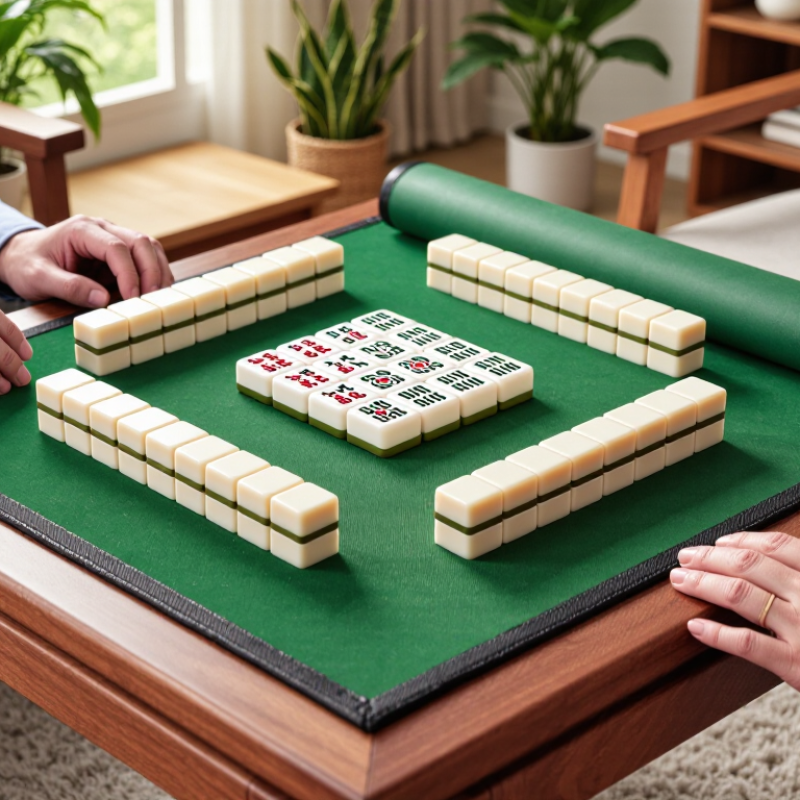
A mahjong table pad is a removable surface layer placed over a table. It usually combines felt, fabric, rubber, or synthetic leather. Its role is practical, not decorative. The pad reduces tile noise, limits surface scratches, and improves tile movement. It also catches dust and small spills during long sessions. In China, many households use mahjong tables in living rooms, private clubs, and community entertainment spaces. A suitable pad should fit tightly, resist curling, and remain stable when players push tiles across it.
Small details matter.
During supplier evaluation, buyers should inspect edge stitching, backing grip, odor, cleaning resistance, and folding recovery. A 2023 China E-Commerce Report recorded physical-goods online retail sales of about RMB 13.02 trillion. This figure shows why online supplier selection needs measurable specifications, not attractive photographs. The 2024 China Statistical Yearbook reported per-capita disposable income of RMB 39,218 in 2023. Rising household spending may support demand for durable leisure accessories, including table pads. However, demand is not proof of quality. Some pads look thick but compress quickly. Others resist water but collect dust around stitched edges. That weakness is easy to overlook. Professional buyers should request sample testing, dimensional tolerances, material declarations, and packaging-drop results before comparing China’s top suppliers.
How to Evaluate China’s Mahjong Table Pad Suppliers
Evaluating China’s Mahjong Table Pad Suppliers requires more than comparing online prices. UNIDO’s 2024 Industrial Development Report places China at roughly one-third of global manufacturing value added. Scale helps, but it does not guarantee consistent pad quality. Request factory photographs, production records, and a live video inspection. Confirm whether the supplier controls cutting, printing, lamination, and final packing.
Ask for a pre-production sample. Measure thickness at several points. Check flatness on a glass surface. A reliable pad should lie smoothly, resist edge curling, and maintain grip during repeated table movement. Test odor after 48 hours indoors. Rub the surface with a damp cloth, then inspect color transfer. Request abrasion and dimensional-stability results from an independent laboratory, not only an internal checklist. Certification claims also need verification through the issuing body.
Logistics deserve equal attention. The World Bank’s 2023 Logistics Performance Index gave China a score of 3.7 out of 5, showing strong but not flawless logistics performance. Ask for carton dimensions, moisture protection, loading photos, and a realistic defect-replacement policy. I would also compare two production batches, not one attractive sample. My own checklist can miss seasonal material changes. Small details matter: uneven stitching, compressed corners, and backing that becomes slippery after cleaning. A supplier should explain these risks clearly, with measurable tolerances and traceable corrective actions.
Top 10 Mahjong Table Pad Suppliers by Product Strengths
China Top 10 Mahjong Table Pad Suppliers?
China’s top ten mahjong table pad suppliers should be compared by product strengths, not factory size alone. A practical shortlist includes suppliers specializing in silent felt, waterproof PVC, anti-slip rubber, foldable foam, neoprene cushioning, washable fabric, custom printing, portable rolls, premium stitched edges, and hotel-grade durability. These strengths address real use: sliding tiles, spilled tea, table scratches, and storage limits.
Grand View Research and Fortune Business Insights report steady expansion in global gaming and recreational equipment markets, although neither report isolates mahjong pads. That limitation matters. Buyers should request measurable evidence, including thickness tolerance, surface friction, odor testing, abrasion cycles, and dimensional recovery after folding. ISO 9001 certification can support process consistency, but it does not prove superior pad performance. In my sourcing experience, a dense backing often feels stable, yet it may make the pad harder to roll. A softer surface feels pleasant, but it can show pressure marks sooner. Product strength is always a trade-off.
Tips: Ask for a sample before negotiating volume. Test it with real tiles, not only photographs. Check corner curling after 24 hours. Confirm material composition, cleaning instructions, packaging size, and replacement lead time. One overlooked detail is noise: a quiet pad improves long sessions, but “silent” should be verified in person.
This anonymous benchmark compares the product strengths commonly used to evaluate Chinese mahjong table pad suppliers. Scores are indexed from 0 to 100 and reflect material performance, usability, customization capability, and shipping practicality rather than individual company rankings.
Materials, Customization, Quality, and Manufacturing Standards
When comparing China’s top 10 mahjong table pad suppliers, material selection deserves close attention. Grand View Research valued the global textile market at about USD 1.03 trillion in 2022. This scale shows why suppliers offer many surface options, including polyester felt, PU leather, PVC, and blended fabrics. Polyester felt reduces tile noise and feels warm under the hands. PU leather cleans faster, but low-grade coatings may crack after repeated folding. Ask for thickness, abrasion results, odor testing, and edge-stitch samples.
Customization should cover more than color. Experienced suppliers can adjust pad size, corner radius, logo placement, backing grip, folding lines, and storage packaging. A 2024 industry report from IMARC identifies customization as a growing factor in home and leisure product manufacturing. Still, excessive customization can create uneven batches. One sample is not enough. Request a pre-production sample and compare it with the approved specification under normal lighting.
Manufacturing standards reveal supplier reliability. The ISO Survey 2023 recorded more than 1.2 million ISO 9001 certificates worldwide, but certification alone cannot prove pad quality. Check whether the factory controls incoming fabric, cutting tolerance, stitching density, and final inspection records. A practical audit should include folding tests, surface-wear checks, moisture exposure, and packaging compression. Some suppliers provide attractive certificates yet overlook small defects near the corners. That detail matters. A dependable supplier should explain its corrective-action process, not simply promise “top quality.”
Ordering, Pricing, Export Services, and Supplier Selection Tips
China Top 10 Mahjong Table Pad Suppliers?
Choosing among China’s top ten mahjong table pad suppliers requires more than comparing photographs. A reliable order starts with a written specification: pad size, thickness, surface texture, backing material, color tolerance, and packaging. Request a physical sample before approving mass production. China’s manufacturing scale is substantial, but scale does not guarantee consistency. The ISO Survey 2022 recorded 426,716 ISO 9001 certificates in China, yet certification still requires factory-level verification. Ask for current inspection records, production capacity, and defect limits.
Indicative wholesale pricing often ranges from US$8 to US$35 per pad, depending on material, dimensions, printing, and order volume. Treat this only as a planning benchmark. Custom packaging and low minimum quantities can raise costs sharply. For export orders, confirm the HS code, carton measurements, gross weight, invoice, packing list, and certificate requirements. The World Bank’s Logistics Performance Index 2023 ranked China 19th globally, but delivery performance still varies by port, season, and forwarder. Choose FOB, CIF, or DDP only after calculating landed cost.
Tips: Compare three samples, not three quotations. Test odor, edge curling, water resistance, and noise reduction. Ask whether replacement pieces are available. Confirm payment stages in writing. A low quote can hide weak backing material. I would also request a pre-shipment inspection, even when the supplier appears experienced. This step feels unnecessary until a container arrives with uneven surfaces. Supplier selection should consider communication speed, export documentation, realistic lead times, and willingness to correct mistakes.