How to Choose the Right Absorbent Core for Global Sourcing?
Choosing the right Absorbent Core is a sourcing decision, not merely a material purchase. It affects leakage control, product comfort, production speed, freight weight, and consumer trust. Smithers’ report, The Future of Global Nonwovens to 2028, highlights continued innovation in engineered nonwoven structures and performance materials. EDANA’s Global Nonwoven Production Statistics also shows the scale and diversity of today’s nonwoven supply base. These reports suggest a practical reality: suppliers differ widely in technology, capacity, and regional experience.
A reliable evaluation should examine fiber composition, core thickness, SAP distribution, acquisition speed, retention capacity, and wet integrity. Ask for test data under realistic pressure and fluid conditions. A core that performs well in a laboratory may behave differently inside a finished diaper or hygiene product. Small details matter. Check roll width, basis weight, packaging, storage limits, and minimum order quantities. Also review supplier traceability and quality controls against recognized standards, including ISO 9001 where applicable.
Cost remains important, but the cheapest core can create expensive failures. Higher SAP loading may improve retention, yet it can increase material cost and reduce flexibility. A lighter structure may lower freight emissions, but it might sacrifice comfort or leakage protection. There is no universal formula. This is where judgment remains imperfect. Compare samples across climates, machines, and use cases before signing a long-term contract. Use documented testing, supplier audits, and pilot production to reduce uncertainty. Global sourcing works best when performance, compliance, resilience, and total cost are assessed together.
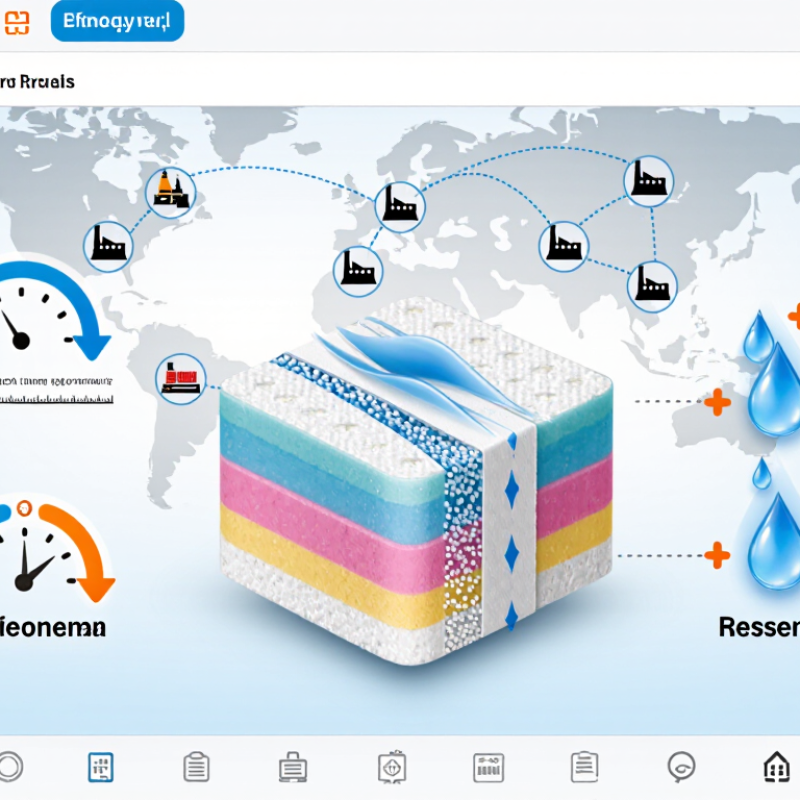
What an Absorbent Core Is and Why It Matters in Global Sourcing
How to Choose the Right Absorbent Core for Global Sourcing?
What an Absorbent Core Is and Why It Matters in Global Sourcing
An absorbent core is the product’s liquid-handling center. It usually combines absorbent fibers with superabsorbent polymer. These materials capture, spread, and retain liquid inside the structure. A well-designed core feels dry after absorption. It also reduces leakage during movement, pressure, and extended use.
For global sourcing, the core affects more than absorbency. Its density influences thickness, packaging volume, and shipping costs. Its composition affects converting speed and product consistency. Suppliers should provide clear data on absorption capacity, retention, rewet, moisture level, and basis weight. Request samples from different production lots. One impressive sample can hide unstable manufacturing. A simple compression test may reveal problems before a full order.
Tips: Define the core’s required performance before comparing prices. Check fiber distribution under normal and heavy loading. Test samples at different temperatures and humidity levels. Confirm packing conditions, lead times, and quality records. Ask how the supplier manages material changes. Small changes matter.
A sourcing team should also examine compatibility with the final product design. A core that performs well alone may shift, clump, or slow production after assembly. Trial runs are essential. Record liquid volume, contact time, pressure, and rewet results. Some specifications may need revision after testing. That is not failure; it is useful evidence. Reliable sourcing depends on repeatable performance, transparent communication, and practical validation across regions.
How to Choose the Right Absorbent Core for Global Sourcing?
An absorbent core is the liquid-handling layer inside a hygiene product. It typically combines cellulose fluff pulp and superabsorbent polymer (SAP). Core basis weight is a practical sourcing indicator because it influences absorption potential, product thickness, material cost, and shipping volume.
The ranges shown are typical commercial engineering ranges for absorbent-core basis weight and are intended for early supplier comparison. Final selection should be confirmed through standardized testing for total absorbency, absorption speed, rewet, retention under pressure, leakage protection, and converting performance.
Which Core Materials and Structures Match Different Applications
Choosing an absorbent core starts with the fluid profile, not the lowest quoted price. Baby diapers need rapid acquisition and thinness. Adult care products need retention under pressure and longer wear. Feminine hygiene often prioritizes fast intake, softness, and edge protection.
A fluff-pulp and SAP blend remains practical for high-volume products. Fluff supports capillary transport. SAP stores liquid, but excessive SAP can slow intake and cause gel blocking. Airlaid cores suit uniform absorbency and flexible shapes. Layered cores separate acquisition from storage. Channelled designs improve fluid distribution, but they require tighter process control.
Smithers’ The Future of Global Nonwovens to 2028 forecasts global nonwoven demand rising from about 35 million tonnes in 2023 to nearly 42 million tonnes by 2028. This growth may improve material availability, but it cannot guarantee consistent quality. EDANA’s absorbent hygiene research also highlights life-cycle impacts. Pulp origin, SAP loading, and core weight therefore need clear sourcing records.
Tips: Test the complete core, not isolated materials. Measure acquisition time, rewet, retention under pressure, wet strength, dust, and thickness. Request three production lots. One sample is not evidence. Compare results after transport simulation and hot-humid storage. A dual-core structure can perform well, but it may increase converting complexity and cost. Lab results can mislead. Field movement, sitting, and compression expose weaknesses that static tests miss. Supplier claims need challenge. Local availability, certification documents, and backup capacity deserve equal attention.
How to Compare Suppliers, Costs, Quality, and Compliance
Choosing the right absorbent core begins with comparable evidence, not brochure claims. In plant trials, record core weight, SAP ratio, acquisition time, rewet, retention under pressure, and leakage after bending. Keep forming speed and fluid dose consistent. Small differences become obvious. ISO 9073 test methods help standardize nonwoven measurements, but finished-product testing still matters. A supplier’s laboratory result is useful, not sacred.
Compare total landed cost, not quoted price. Include pulp and SAP, conversion yield, packaging, freight, duties, tooling, inspection, and rejected rolls. UNCTAD’s Review of Maritime Transport 2024 states that over 80% of global trade by volume moves by sea. Therefore, a cheaper distant supplier may lose its advantage during freight-rate spikes. Request three months of batch data, change-control records, and a pilot lot. I have seen beautiful samples fail when humidity changed. That risk is easy to underestimate.
Compliance needs a clear document trail. Request ingredient declarations, safety data sheets where applicable, restricted-substance screening, traceability, and certificates matching the production site. The ISO Survey 2023 recorded 1,265,216 ISO 9001 certificates worldwide. Certification signals a quality system, not automatic core performance or legal conformity. Check each destination’s requirements with qualified testing professionals. Score suppliers across quality, cost, capacity, lead time, and corrective-action speed. Do not hide uncertainty. A transparent supplier with one weakness may outperform a polished supplier with missing evidence.
How to Choose the Right Absorbent Core for Global Sourcing? - How to Compare Suppliers, Costs, Quality, and Compliance
The following benchmark compares commonly used absorbent-core constructions. Performance and cost depend on product format, basis weight, SAP grade, converting process, order volume, destination market, and freight terms.
1. Absorbent-Core Construction Benchmark | Core construction | Typical material structure | Typical SAP content | Typical basis weight | Absorption and retention profile | Relative material cost | Common applications |
| Fluff pulp only | Defibrated cellulose fibers, usually wrapped with tissue or nonwoven material | 0% | 300–900 g/m² | Fast uptake and good distribution, but lower gel-based retention and greater bulk | Low | Light-duty pads, wipes, low-absorbency hygiene products |
| Fluff pulp plus SAP | Airlaid or conventional fluff pulp combined with superabsorbent polymer particles | 15–45% of core dry weight | 250–800 g/m² | Balanced acquisition, retention, and cost; performance depends strongly on SAP distribution | Medium | Baby diapers, adult incontinence products, menstrual products |
| Airlaid cellulose plus SAP | Uniform airlaid cellulose matrix with SAP integrated through the web | 20–50% of core dry weight | 150–700 g/m² | Good thinness and uniformity; liquid acquisition may require an acquisition-distribution layer | Medium to high | Thin pads, adult care products, medical and industrial absorbent formats |
| Multi-layer composite core | Separate acquisition, distribution, storage, and acquisition-barrier layers | 20–55% of core dry weight | 180–800 g/m² | Best control of strike-through, rewet, and liquid distribution when correctly engineered | High | High-performance diapers, overnight products, heavy incontinence products |
| SAP-rich thin core | High-SAP layer held between tissue, nonwoven, or adhesive-stabilized carrier layers | 45–70% of core dry weight | 100–450 g/m² | Very thin and high-retention, but sensitive to gel blocking, SAP migration, and liquid distribution design | High | Premium thin diapers and high-capacity adult-care products |
2. Supplier Evaluation Scorecard | Evaluation dimension | Suggested weight | Evidence to request | Recommended acceptance criteria | Key sourcing risk |
| Technical performance | 25% | Absorption capacity, retention, rewet, strike-through, acquisition time, SAP distribution, and compression-recovery test data | Results meet the approved product specification under the same test method and load condition | Laboratory results may not represent finished-product performance |
| Quality management | 15% | Quality manual, process controls, batch records, calibration records, nonconformance history, and change-control procedure | Documented traceability from incoming raw materials to finished rolls or converted cores | Uncontrolled changes in pulp, SAP, binder, or basis weight |
| Cost competitiveness | 15% | Material cost, conversion cost, tooling, packaging, payment terms, minimum order quantity, and Incoterm quotation | Compare total landed cost per finished core, not only the quoted price per kilogram | Freight, duty, yield loss, and minimum-order costs are omitted |
| Supply continuity | 15% | Monthly capacity, lead time, safety stock policy, alternate raw-material sources, and business-continuity plan | Capacity and lead time support forecast demand with defined escalation procedures | Single-site or single-source dependency |
| Regulatory compliance | 15% | Safety data sheets, restricted-substance declaration, REACH/SVHC assessment where applicable, product composition, and market-specific declarations | Documentation covers every destination market and is updated after material changes | A certificate applies to the factory but not to the supplied material or formulation |
| Sustainability and traceability | 10% | Fiber-origin information, recycled-content evidence where claimed, forestry certification where applicable, energy data, and waste controls | Claims are supported by valid chain-of-custody or supplier documentation | Unverified environmental claims or incomplete raw-material traceability |
3. Cost and Quality Comparison Framework | Comparison factor | How to measure | Why it matters | Recommended decision rule |
| Total landed cost | Product price + packaging + freight + insurance + duty + inspection + expected yield loss | The lowest ex-works price may not be the lowest delivered cost | Compare on a cost-per-1,000 finished units basis |
| Absorption efficiency | Absorption capacity divided by core dry weight, together with rewet and acquisition time | A higher-capacity core can reduce product weight and transportation cost | Select the design that meets performance targets at the lowest finished-product cost |
| Batch consistency | Track basis weight, moisture, SAP percentage, dimensions, and absorption results by lot | Variation can cause leakage, converting downtime, and customer complaints | Require agreed control limits and a certificate of analysis for each shipment |
| Compliance readiness | Review declarations, test reports, restricted-substance controls, and change notifications | Non-compliance can delay customs clearance, market launch, or customer approval | Do not approve a supplier with unresolved regulatory documentation gaps |
| Logistics reliability | Measure quoted lead time, actual lead time, on-time delivery, container utilization, and damage rate | Absorbent cores are bulky and can be affected by moisture and compression during transport | Use moisture-protective packaging and define shipment acceptance conditions |
Note: The ranges shown are industry planning benchmarks rather than universal specifications. Final approval should be based on pilot production, finished-product testing, destination-market requirements, and a signed technical specification.
How to Validate, Purchase, and Manage the Selected Absorbent Core
How to Choose the Right Absorbent Core for Global Sourcing?
How to Validate, Purchase, and Manage the Selected Absorbent Core
Selecting an absorbent core requires more than comparing absorption numbers. The 2023 WHO/UNICEF JMP report estimates that 1.8 billion people menstruate globally. User expectations therefore vary across climates, body types, and usage habits. A practical core may combine fluff pulp, superabsorbent polymer, and an acquisition layer. Each material needs a defined function.
Validation should measure total capacity, retention under pressure, rewet, strike-through time, and core integrity. Use ISO 11948-1 where applicable, then add realistic pressure and temperature tests. Grand View Research estimated the global superabsorbent polymers market at about USD 9 billion in 2023. That growth can increase supply options, but not every low-cost grade performs consistently. We sometimes trust laboratory results too much. Field simulations can expose channeling, uneven distribution, or poor storage stability. Test at least three production lots before approval.
Tips: Write measurable purchasing specifications. Include basis weight, SAP ratio, moisture limits, roll width, and packaging conditions. Request certificates, lot samples, and change notifications. Track incoming defects, delivery accuracy, and rewet complaints monthly. A dual-source plan improves resilience, but switching suppliers still requires repeat validation. Keep retained samples for every approved lot. Small details matter.