Choosing the best solar tracker begins with the project site, not a glossy product brochure. Terrain, wind patterns, soil conditions, module design, and grid requirements can change the right decision. A flat desert site may support long tracker rows, while uneven land may require shorter sections and flexible foundations. Water availability matters too, especially where dust reduces output and cleaning becomes expensive.
Dan Shugar, founder of Nextracker and a recognized solar industry expert, has often emphasized that “the best tracker is the one that delivers the highest energy yield at the lowest total cost.” That principle sounds simple. It is not always easy to prove. Developers should compare lifetime energy production, installation labor, maintenance access, spare-part availability, and software performance. A tracker that looks cheaper at purchase may create higher costs during extreme weather or repeated repairs. Small details matter. Think about bearing protection, cable routing, stow behavior, and the visibility of operating data.
There is no universal winner.
A reliable evaluation also needs independent engineering review and realistic production modeling. Ask suppliers for field performance evidence, warranty conditions, and references from similar climates. Some assumptions may be wrong. Early designs often underestimate uneven terrain, delayed deliveries, or local construction limits. The best solar tracker balances energy gain with durability, serviceability, and project risk. It should perform on paper, then continue performing under hot steel, blowing dust, heavy rain, and years of daily movement.
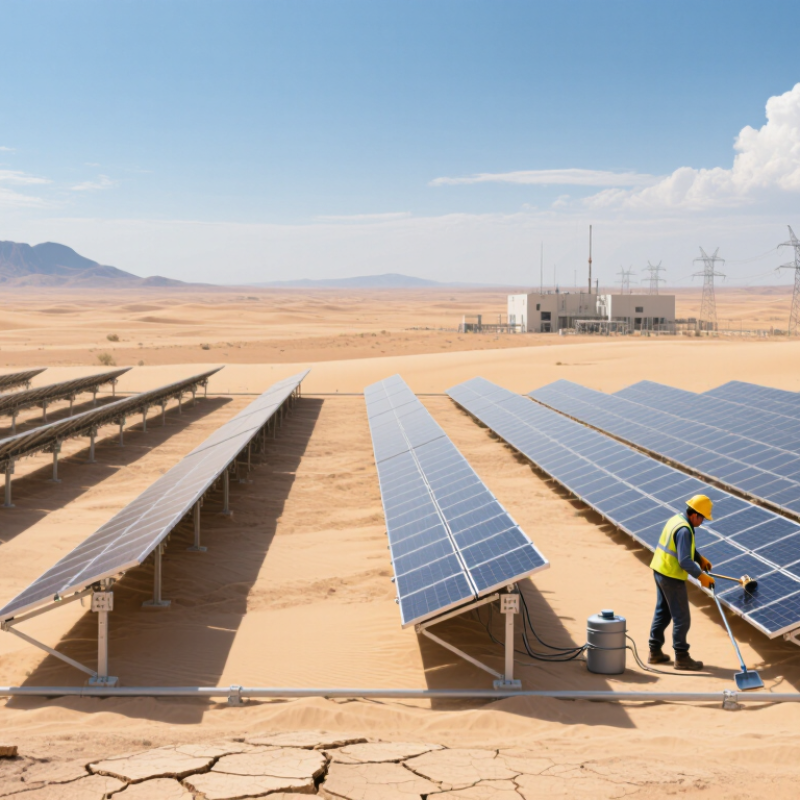
Start with the site, not the equipment catalogue. Record latitude, terrain slope, soil strength, wind speed, snow load, and grid limits. These details determine whether tracking adds value or creates avoidable risk. A flat, high-irradiance site may suit single-axis tracking. A steep or shaded site may not.
Define your target output in kilowatt-hours, not simply tracker movement. Compare the expected gain with added foundations, controls, motors, inspections, and downtime. I have seen designs chase maximum yield while underestimating difficult soil conditions. That is an expensive lesson.
Ask how the system behaves during high winds. Check its safe stow position, communication reliability, and manual recovery process. Review at least one full year of solar resource data, preferably from a bankable dataset. NREL’s Solar Resource Database can support this assessment. Include future panel replacement and vegetation growth in the layout. Small oversights matter. A technically impressive tracker can still be the wrong tracker for your project.
Single-axis trackers rotate panels from east to west during the day. They are widely used in utility-scale projects because their structure is simpler, lighter, and easier to maintain. NREL’s System Advisor Model examples indicate that single-axis tracking can deliver roughly 15–25% more annual energy than fixed-tilt systems at favorable sites. That gain is not guaranteed. Cloud cover, wind, terrain, and row spacing can reduce it quickly.
Dual-axis trackers adjust both azimuth and elevation. They follow the sun more precisely, especially at higher latitudes or locations with strong direct sunlight. Fraunhofer ISE’s Photovoltaics Report 2024 notes that bifacial energy gains often fall around 5–20%, depending on albedo, rear shading, and system layout. Dual-axis movement may improve those gains. It also adds motors, sensors, controls, and maintenance points.
The IEA PVPS Trends 2024 report recorded about 447 GW of new photovoltaic capacity worldwide in 2023. Large projects therefore need repeatable performance, not attractive simulations alone. A single-axis design may suit flat land with steady solar exposure and limited maintenance access. Dual-axis equipment can make sense for research sites, constrained land, or high-value electricity production. However, a higher modeled yield may not offset extra foundations, servicing, and downtime. I would request hourly simulations, wind-load assumptions, and a five-year maintenance estimate before choosing. The uncomfortable question remains: will the added energy survive real dust, storms, and imperfect site work?
Choosing a solar tracker starts with the ground beneath it, not the brochure. Walk the site at different hours.
Record slopes, drainage paths, soil changes, and nearby objects that cast shadows. A small ridge can affect row spacing and construction costs. Wind exposure also matters, especially on open farmland or elevated terrain. Review local weather records, but verify them with on-site measurements when possible.
Land use should be assessed beyond the panel footprint. Trackers need access roads, maintenance corridors, drainage control, and space for electrical equipment. Irregular boundaries may create unused pockets between rows. On agricultural land, compare crop cycles, machinery movement, and soil compaction risks. A compact layout is not always the most productive one. My first layout might look efficient on paper, yet leave poor turning space for maintenance vehicles.
Energy potential depends on more than annual sunlight. Study the sun’s path, seasonal shadows, temperature, and expected backtracking losses. Model several tracker angles and row spacings against realistic terrain data. Use conservative assumptions for availability and soiling. A high-yield estimate can become unreliable when dust, snow, or maintenance access is overlooked. Independent engineering review helps challenge optimistic results. The model is not the site.
Choose the tracker geometry that fits measured conditions, usable land, and dependable energy production. A slightly lower forecast may be more credible.
Choosing a solar tracker starts with a cost model, not a brochure. Fraunhofer ISE’s Photovoltaics Report 2024 indicates that tracking can increase annual energy yield by roughly 15–25%, depending on climate and site design. That gain may justify additional motors, controls, foundations, and commissioning labor. However, higher output does not always mean better returns. Compare levelized cost of electricity, replacement parts, land grading, and financing costs across the project’s full life.
Maintenance details often decide system reliability. NREL’s Best Practices for Operation and Maintenance of Photovoltaic Systems identifies tracker alignment, drive components, wiring, and stow functions as important inspection points. Ask how technicians will reach each row after heavy rain or high winds. Check whether spare actuators, bearings, sensors, and controllers can be stored locally. Small delays can become expensive during peak production months. Keep it practical.
Reliability should be measured with evidence. Review independently verified availability data, fault-response times, wind-stow performance, and service records from comparable climates. IEC 62817 provides design qualification guidance for photovoltaic tracking systems, but certification alone cannot predict every field failure. A dusty site may need more frequent cleaning and inspection than the maintenance schedule suggests. I have seen planning models underestimate this burden. That mistake deserves a second review.
Use site-specific simulations with terrain, weather, shading, and row spacing. NREL’s Annual Technology Baseline also shows that tracking systems require different capital and operating assumptions than fixed-tilt systems. Select the design that remains financially tolerable when energy yield disappoints slightly. Reliability is not perfection. It is recoverability.
How to Choose the Best Solar Tracker for Your Project
Select the Tracker That Best Fits Your Project Goals
Your project goal should guide the tracker choice, not its appearance or advertised energy gain. A single-axis tracker may suit large, level sites seeking stronger daily production. A dual-axis system can capture more sunlight, but it usually adds cost, controls, and maintenance points. Fixed-tilt structures may deliver better value where land, labor, or access is limited. Define the target first: maximum annual energy, faster payback, simpler operation, or reduced land use.
A reliable selection process starts with site evidence. Review hourly solar data, wind records, snow conditions, soil reports, and terrain surveys. Then compare energy models using realistic losses, not ideal weather assumptions. Check row spacing carefully. Poor spacing can create shadows and restrict maintenance vehicles. Ask how motors, bearings, wiring, and controllers will be inspected after storms. A small maintenance detail can affect years of output.
The first design is rarely perfect. A tracker may produce more electricity but require stronger foundations and closer monitoring. That tradeoff deserves honest review. I would also test a fixed-tilt option, even when tracking appears attractive. Compare capital cost, replacement parts, cleaning access, insurance, and expected downtime over the project life. Independent engineering checks can expose optimistic assumptions. Local installation experience matters, especially on uneven ground or in harsh climates. Choose the system that supports your actual project goals, not the highest figure in a sales table.
| Tracker Option | Movement and Orientation | Typical Annual Energy Gain vs. Fixed-Tilt PV | Best-Fit Project Goals | Site Requirements | Land and Row Considerations | Operational Complexity | Key Trade-Off | Overall Fit |
|---|---|---|---|---|---|---|---|---|
| Horizontal Single-Axis Tracker | Rotates modules around a horizontal north–south axis, generally following the sun from east to west. | Approximately 15%–30%; the actual result depends on latitude, climate, row spacing, terrain, and backtracking settings. | Maximizing energy yield for large, ground-mounted utility and commercial projects. | Requires suitable ground conditions, access for construction and maintenance, and careful control of slope and drainage. | Usually needs more spacing and a larger site footprint than fixed-tilt systems, although optimized layouts can reduce land use. | Moderate; includes motors, controllers, sensors or algorithms, moving components, and periodic inspection. | Higher energy yield and improved morning or afternoon production can increase cost, maintenance needs, and wind-management requirements. | Best general choice for large sunny sites |
| Tilted Single-Axis Tracker | Rotates around an axis that is tilted relative to the ground, allowing the tracker geometry to better suit a specific latitude. | Approximately 15%–30% in suitable locations; performance varies significantly with site latitude and system design. | Improving energy production where a tilted axis can provide a useful balance between solar capture and structural design. | Needs accurate geotechnical assessment and careful installation because foundations and row geometry can be more demanding. | May require more complex grading or row alignment than a horizontal system and can have tighter terrain constraints. | Moderate to high; mechanical alignment and installation quality are especially important. | Can perform well in selected locations but is less universally applicable than horizontal single-axis tracking. | Best for location-specific optimization |
| Vertical Single-Axis Tracker | Rotates around a mostly vertical axis, changing the azimuth while the module tilt remains fixed or semi-fixed. | Approximately 10%–25% in appropriate designs; gains depend on latitude, module tilt, and the project’s production profile. | Capturing more early-morning and late-afternoon energy or fitting sites where an east–west orientation is advantageous. | Requires stable foundations, adequate clearance, and a layout designed around the tracker’s rotation envelope. | Row spacing and shading analysis are important because the movement pattern differs from horizontal-axis systems. | Moderate; fewer movement directions can simplify some designs, but the system still has active mechanical components. | May deliver less midday optimization than a horizontal system in some locations and is highly dependent on layout design. | Best for specialized layouts and production profiles |
| Dual-Axis Tracker | Adjusts both azimuth and elevation so the module surface can remain more directly aligned with the sun. | Approximately 25%–40% in favorable conditions; the range is highly site-dependent and is not guaranteed. | Maximizing energy from limited module area or supporting applications that value high output per panel. | Needs strong foundations, reliable access, low obstruction risk, and careful wind-load and structural analysis. | Often has a larger equipment footprint and more complex spacing requirements than single-axis systems. | High; more moving parts, controls, and maintenance activities are involved. | Higher potential yield is accompanied by greater capital cost, mechanical complexity, wind exposure, and maintenance requirements. | Best when land or module area is highly constrained |
| Backtracking-Enabled Single-Axis Tracker | Uses programmed reverse rotation during low sun angles to reduce row-to-row shading rather than pointing directly at the sun at all times. | Often improves the usable yield of single-axis systems; the benefit varies with row spacing, terrain, latitude, and diffuse-light conditions. | Reducing morning and evening shading losses while maintaining a practical land-use balance. | Requires accurate terrain data, reliable control software, commissioning, and site-specific shade modeling. | Can support tighter row spacing than a simple direct-tracking strategy, but overly tight layouts may still increase shading losses. | Moderate to high; software configuration and terrain-aware control are critical. | Backtracking reduces shade but may sacrifice some direct solar alignment, especially on uneven terrain or under diffuse skies. | Best for optimized utility-scale layouts |
| Fixed-Tilt Reference System | Modules remain at a fixed azimuth and tilt angle with no active movement. | Baseline: 0% tracker gain; used as the reference for comparing tracking options. | Minimizing mechanical risk, simplifying operation, or working on constrained, steep, or difficult sites. | Generally has simpler foundations and fewer operational requirements, but still needs proper drainage, access, and structural design. | Can offer a compact and predictable layout, depending on tilt angle and required inter-row shading clearance. | Low; no motors or tracking controls are required. | Lower energy capture during morning and afternoon periods compared with suitable tracking systems. | Best benchmark for cost-focused or complex sites |
Note: Energy-gain figures are industry planning ranges rather than guarantees. Final tracker selection should be based on site-specific solar-resource analysis, latitude, terrain, wind and snow loads, soil conditions, land availability, energy-price assumptions, maintenance capability, and total life-cycle cost.