Choosing among China’s leading manufacturers is not as simple as comparing a solar panel’s price or rated power. Buyers also need to examine product warranties, independent performance data, manufacturing quality, and the supplier’s ability to provide long-term support. A polished brochure helps, but it cannot answer every practical question.
The scale of solar matters. International Energy Agency Executive Director Dr. Fatih Birol said, “Solar is the new king of electricity markets around the world.” That broader momentum makes manufacturer choice more consequential, not less. This guide compares major Chinese brands, including LONGi, JinkoSolar, Trina Solar, and JA Solar, while explaining what their product ranges and track records may mean for different projects.
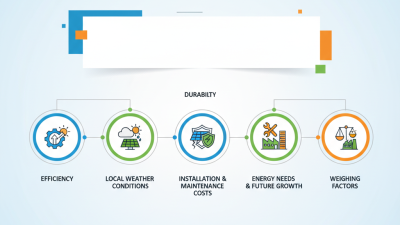
Details matter. A panel installed on a warehouse roof faces different constraints from one used in a home system or a utility-scale project. Readers should compare efficiency, temperature performance, degradation claims, warranty terms, and local service—not rely on brand recognition alone. Availability and support can also vary by market, so a company’s global reputation is not a guarantee of a smooth local experience. Even public rankings have limits; they may reflect shipment volume rather than the best fit for a specific buyer. The aim here is a practical, evidence-minded shortlist, with room for doubt where the data does not settle the question.
A reliable evaluation begins with the factory floor, not a glossy brochure. Check whether production lines are automated, clean, and consistently supervised. Ask how incoming silicon cells, glass, and encapsulant are inspected. These materials affect output and durability. A brief visit can reveal orderly processes, but one visit cannot prove year-round performance.
Quality evidence matters more than impressive claims. Review independent test reports, certification scope, and the dates of recent audits. Confirm that the tested panel matches the model being offered. Ask how each production batch is tracked and how defects are handled. A polished factory tour can mislead. Look for sample records, calibration logs, and documented corrective actions instead.
Performance should be judged under real operating conditions, not only laboratory ratings. Compare temperature behavior, power tolerance, degradation data, and warranty terms. Request field-performance references from projects with similar climates and installation conditions. Check whether the manufacturer can explain a failure in plain language and provide replacement parts promptly. Response time matters. Pricing also deserves scrutiny: unusually low quotes may reflect different materials, service coverage, or testing depth. Even strong evidence has limits; published figures cannot predict every roof, installer, or weather pattern.
China’s solar manufacturing industry is built around a closely connected supply chain: polysilicon, ingots, wafers, cells, and finished modules. The International Energy Agency reported that China held more than 80% of global manufacturing capacity across these stages in 2021 (IEA, Solar PV Global Supply Chains, 2022). This concentration supports large production volumes and competitive costs. It can also expose buyers to disruptions in a limited number of production regions. The scale is striking.
Domestic demand strengthens the industry. China’s National Energy Administration recorded 216.88 GW of newly installed solar capacity in 2023, bringing cumulative capacity to about 609.5 GW. These figures measure installations, not factory output, but they show the size of the home market. For buyers assessing manufacturers, headline capacity alone says little about long-term reliability. Check independent test results, product traceability, degradation guarantees, and warranty support in the destination market. Quality can vary, even within one factory. That caveat is easy to miss. China’s advantage extends beyond assembly to its network of suppliers, equipment makers, logistics, and technical expertise. Still, price pressure may encourage rushed expansion, so a polished datasheet should not replace careful factory-level due diligence.
Leading Chinese solar panel manufacturers benefit from a deeply integrated supply chain, from silicon processing to finished modules. The IEA’s 2022 report, Solar PV Global Supply Chains, found that China held more than 80% of global manufacturing capacity across key solar panel production stages. It also projected that China’s share of wafer production could reach 95% by 2025. These figures explain the sector’s scale, but they do not guarantee that every supplier offers the same quality.
A careful comparison should look beyond factory size. Check independently verified module efficiency, product warranties, degradation rates, and performance in heat or low-light conditions. Ask for test reports and traceable production details. Small details matter.
Still, capacity is not the same as reliability. A supplier’s delivery record, technical support, and replacement process can matter more than a headline efficiency figure. Paperwork can be neat; field performance is the harder test. Do not treat this as a perfect checklist—project conditions and installation quality can change the result.
China’s manufacturing advantage is not just factory size. It is the coordination of wafer, cell, and module production. The IEA’s 2022 report, Solar PV Global Supply Chains, found China held over 80% of global manufacturing capacity across every major stage, and more than 95% for wafers. Scale matters. Dense supplier networks can shorten material lead times and support rapid process upgrades, though capacity alone does not prove consistent quality.
Technology comparisons need similar care. TOPCon adds passivated contacts to reduce electrical losses; heterojunction cells combine crystalline and thin-film silicon layers; back-contact designs move contacts behind the cell to limit front-side shading. ITRPV’s 2024 roadmap tracks these n-type designs as key directions for cell development. Their real-world value depends on module temperature, shading, degradation, and production yield—not peak efficiency alone. A line can look impressive on paper; its field record may still be young. Buyers should compare independently tested output, warranty terms, and manufacturing traceability, not just advertised cell architecture. Even this comparison is imperfect: test conditions and product generations differ. That detail is easy to miss.
Choosing a Chinese solar panel manufacturer takes more than comparing quoted prices. The IEA’s 2022 report, Solar PV Global Supply Chains, found that China held over 80% of global manufacturing capacity across key solar-panel stages. That scale can support competitive pricing, but it does not prove that a particular factory has consistent quality. Ask where the modules are made, which production steps are in-house, and whether the quoted model matches the one tested. Details matter.
Request current IEC 61215 and IEC 61730 certificates, plus independent test reports tied to the exact module model. Check the warranty terms, stated degradation rate, and exclusions in writing. Ask for serial-number traceability and a sample bill of materials; then verify that the delivered modules match it. A polished brochure is not evidence. If possible, arrange a factory audit and inspect cell handling, lamination, and finished-module checks. Small process gaps can become costly later.
Review audited financial statements and confirm who will honor the warranty if ownership or production changes. Compare lead times, packaging, payment milestones, and spare-module availability—not just price per watt. I would still be cautious about any supplier that answers every question with “yes.” That may be convenient, but it leaves little to verify. A short trial order can reveal how well the supplier handles documentation, shipping, and defects before a larger commitment.
| Evaluation Dimension | Useful Reference or Benchmark | What to Request or Verify | How to Use It When Choosing |
|---|---|---|---|
| Module efficiency | Many current mainstream crystalline-silicon modules are in the low-20% efficiency range; compare like-for-like module types and power ratings. | Request the exact model datasheet, including rated power, efficiency, dimensions, and test conditions. | Compare efficiency alongside price, roof area, and system design. A higher percentage alone does not establish better reliability. |
| Rated power and product fit | Commercially available modules span a broad power range, with many current products rated at several hundred watts per module. | Confirm the model number, dimensions, weight, connector type, and electrical ratings on the quotation and datasheet. | Check compatibility with the project’s mounting system, inverter, transport limits, and installation plan. |
| Independent qualification testing | IEC 61215 covers design qualification and type approval for terrestrial PV modules; IEC 61730 addresses module safety qualification. | Ask for valid certificates and test reports that match the exact product family and model being offered. Verify the issuing laboratory where possible. | Treat certification as a baseline, not a guarantee of long-term performance or factory quality. |
| Product and performance warranties | Warranty terms vary by product and market. Product warranties commonly run from about 12 to 25 years, while performance warranties may extend to 25 or 30 years. | Read the full warranty document, including exclusions, claim procedures, remedy, governing law, and the responsible legal entity. | Compare enforceable terms rather than relying on a headline warranty duration. |
| Performance degradation | Annual degradation guarantees differ by model and warranty. The warranted first-year loss and subsequent annual rate should be stated explicitly. | Request the model-specific degradation schedule and the calculation method used to define warranted output. | Compare lifetime energy assumptions using the same period and calculation basis across offers. |
| Factory quality management | ISO 9001 relates to quality-management systems; the certificate’s scope and validity matter. | Request a current certificate covering the manufacturing site and relevant product scope. Consider an independent factory audit for large orders. | Check that the quoted production site is the site covered by the documentation. |
| Traceability and production control | Reliable records should link each delivered module to its model, production batch, and serial number. | Ask how serial-number records, inspection reports, and shipment documents are maintained and supplied. | Prefer suppliers that can provide consistent batch-level documentation and a clear process for handling defects. |
| Commercial and export experience | Experience should be relevant to the destination market, product type, and project scale; claims should be supported by records. | Request redacted shipment references, recent export documentation, and references from comparable projects. | Check familiarity with local import rules, grid requirements, packaging, and delivery terms. |
| Production capacity and lead time | Capacity and lead times vary with product model, factory loading, materials, and order size. | Request a dated production schedule, available capacity for the specific model, and written delivery milestones. | Use a realistic schedule in the purchase contract; do not rely solely on a general capacity claim. |
| Pricing and payment terms | Module quotations can differ because of model, shipment terms, order quantity, payment conditions, and included documentation. | Compare itemized quotations on the same model, quantity, currency, Incoterm, shipment route, and warranty basis. | Evaluate total landed cost and payment risk, not just the quoted module price. |
| Supplier verification | A manufacturer, trading company, and sales agent may have different responsibilities and warranty obligations. | Verify the contracting entity, business registration, manufacturing address, bank-account beneficiary, and authorization to sell the product. | Ensure the contract clearly identifies the seller, manufacturer, product model, and party responsible for warranty claims. |
Reference values are general comparison guidance, not a ranking or guarantee. Confirm all specifications, certificates, warranty terms, and delivery commitments for the exact module model and production site before purchasing.