As we move towards a more sustainable future, the adoption of solar energy solutions has become essential. In 2022, solar energy accounted for about 20% of the renewable energy consumption in the United States (U.S. Energy Information Administration). This trend reflects a growing awareness of environmental issues and a push for cleaner alternatives.
Homeowners and businesses are increasingly embracing solar energy solutions. By 2026, experts predict solar capacity will exceed 400 gigawatts in the U.S. alone. The rise in efficiency of solar panels and energy storage systems plays a crucial role in this growth. Despite the benefits, challenges remain. The initial investment can be daunting for many. Some individuals encounter installation barriers, while businesses struggle with regulatory hurdles.
As we explore the best solar energy solutions for 2026, it's vital to reflect on both progress and setbacks. The journey to widespread solar adoption is ongoing. Every innovation brings us closer to a greener future, yet we must remain aware of the obstacles that persist.
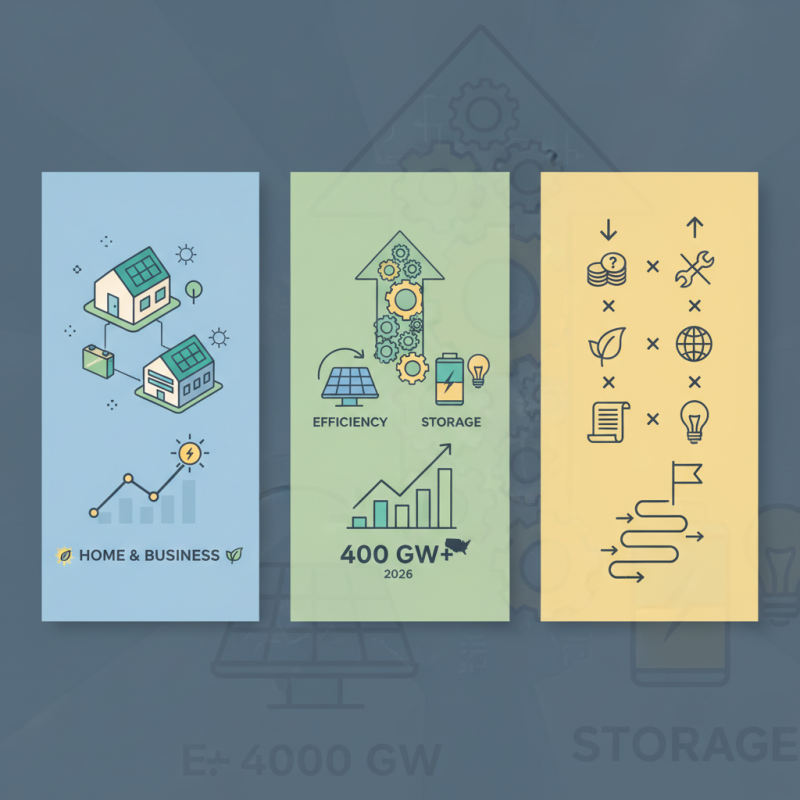
Solar energy has become a key alternative for powering homes and businesses. Many provide surprising benefits. Studies indicate that solar panels can reduce electricity bills by 50-70% annually. This decrease results from generating your own energy and relying less on utility companies.
The environmental impact is profound. According to the National Renewable Energy Laboratory, solar power reduces greenhouse gas emissions by 80% compared to fossil fuels. Transitioning to solar energy can significantly contribute to climate change mitigation. However, initial installation costs may be a barrier for many. It’s essential to assess whether financial incentives and financing options are advantageous.
Furthermore, maintenance remains a concern. Solar systems generally require little upkeep, but occasional cleaning and inspections are needed. Neglect can lead to lower efficiency. Evaluating these factors is crucial for maximizing the benefits. Solar energy offers potential, but it isn't a perfect solution. Balancing costs, environmental benefits, and practical challenges is essential for informed decision-making.
| Solution Type | Energy Output (kW) | Installation Cost ($) | Payback Period (Years) | Environmental Impact (CO2 Offset) |
|---|---|---|---|---|
| Residential Rooftop Solar | 5 | 15,000 | 5 | 4,500 lbs/year |
| Commercial Solar Farm | 100 | 250,000 | 7 | 90,000 lbs/year |
| Off-Grid Solar Kit | 3 | 8,000 | 4 | 3,600 lbs/year |
| Hybrid Solar System | 8 | 20,000 | 6 | 6,800 lbs/year |
| Community Solar Program | 50 | 150,000 | 5 | 40,000 lbs/year |
In 2026, solar energy solutions have evolved significantly. Homeowners and businesses now have a variety of options to enhance energy efficiency. Solar panels remain a popular choice. These panels convert sunlight into electricity. However, their effectiveness varies based on installation and location. It’s essential to evaluate the angle and direction of rooftops before investing.
In addition to traditional solar panels, solar roof tiles are gaining traction. These tiles blend seamlessly with your roof, providing aesthetic appeal. They also generate electricity without the bulk of conventional panels. Battery storage systems are crucial as well. They store excess energy for use during nighttime or cloudy days. Yet, the cost of these systems can be quite high.
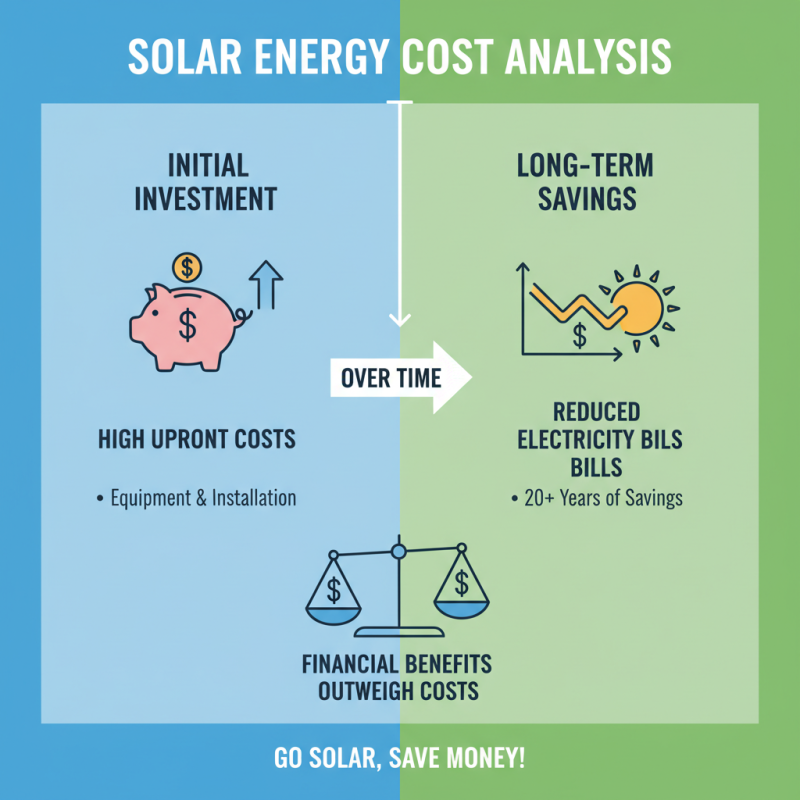
Emerging technologies have introduced solar-powered heating solutions. These can be used for water heating and space heating. They offer an environmentally friendly alternative to traditional gas and electric heating. One challenge remains: the initial investment. Many people hesitate due to high upfront costs. It’s important to analyze long-term savings versus initial expenses carefully.
When considering solar energy systems for your home or business, several key factors must guide your decision. The location plays a crucial role. Areas with abundant sunlight yield better energy production. However, not every spot on your roof may receive equal sunlight. Shadows from trees or buildings can impact efficiency quite a bit. It's essential to analyze these factors before installation.
Another important consideration is the size of the system. Your energy needs determine how much power you require. This requires a careful assessment of your current consumption patterns. A system that’s too small may not meet your demands, while an oversized system can result in wasted resources. Then there's the aspect of installation costs. Affordable solutions are tempting, but compromising on quality could lead to poor performance over time. Make sure to evaluate the long-term benefits against initial investments. Various financing options are available, but understanding the terms is crucial. Be cautious of contracts that may not fit your financial situation.
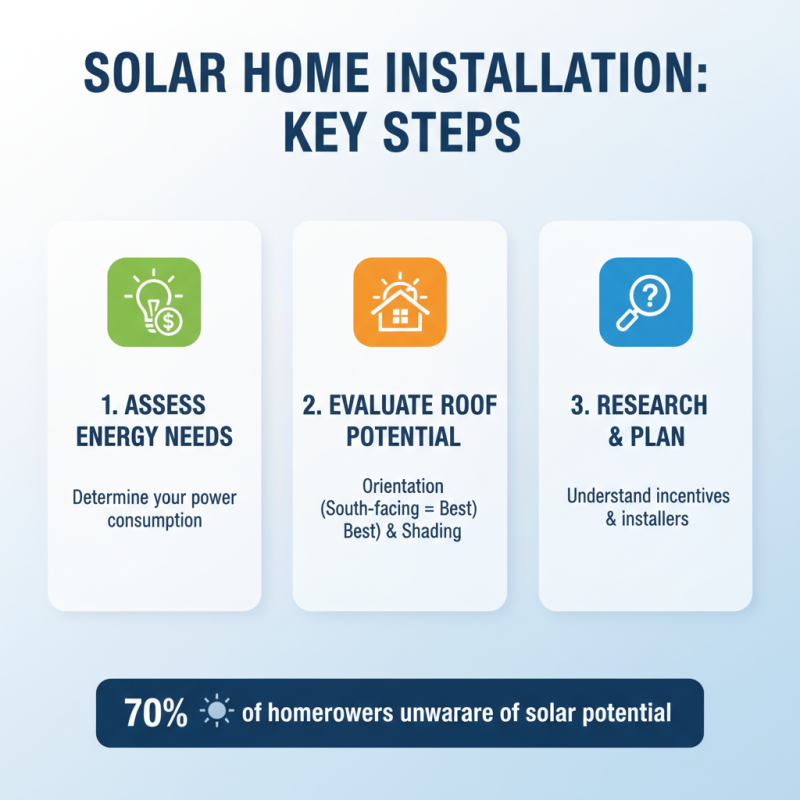
The installation process for solar energy systems can be quite complex. Homeowners need to assess their energy needs accurately. It's crucial to evaluate roof orientation and shading. A south-facing roof often works best for solar panels. Research shows that about 70% of homeowners are unaware of their roof's solar potential.
Once the assessment is done, the next step is hiring certified installers. This choice impacts efficiency and longevity. Reports indicate that improperly installed systems can lose up to 30% efficiency. Attention to detail is essential. Ensure there’s a proper audit of wiring and inverter placement. It seems like a simple step, but many overlook it.
Maintenance plays a significant role in system performance. Regular cleaning and inspections can enhance energy production. Studies show that systems maintained correctly can last over 25 years. However, the frequency of maintenance can be a mystery to many. Some homeowners forget about necessary upkeep. Keeping records of inspections and performance helps track issues early on. It’s a learning curve that can feel daunting.
Cost analysis plays a crucial role in adopting solar energy solutions. The initial investment can be significant. Homeowners might hesitate due to high upfront costs. However, the long-term savings are often overlooked. Solar panels reduce electricity bills substantially. Understanding these financial dynamics can shift perceptions.
Various financial incentives exist that help make solar adoption more feasible. Tax credits can alleviate some of the initial burdens. Rebates and grants from local governments often enhance affordability. State programs may also offer favorable financing options. It’s essential to research what’s available in your area.
Despite these incentives, many still fear the complexity of solar investments. Some may find it challenging to navigate the details. Installation expenses and maintenance costs can cause uncertainty. It’s important to assess these factors carefully. Every household's situation is unique, requiring a tailored approach to solar energy solutions.