
background

Blog

What Are the 2026 Top Axial Duct Fans for Global Buyers?

Global buyers entering 2026 need more than a high airflow number when selecting Axial Duct Fans. Real installations expose weaknesses quickly. A fan may move impressive air in an open test, yet struggle inside a long duct with bends, filters, or dampers. Noise can also become uncomfortable in workshops, kitchens, warehouses, and occupied buildings.

This guide examines the leading Axial Duct Fans expected to attract international attention in 2026. The evaluation considers airflow, static pressure, motor efficiency, acoustic performance, construction quality, controls, and service access. Voltage compatibility matters. So do frequency ratings, enclosure protection, corrosion resistance, and available replacement parts. A 315-millimeter fan with a rugged housing may suit a humid plant better than a cheaper model with higher advertised airflow. Manufacturer data provides a useful starting point, but independent testing and verified field feedback deserve greater weight.

No single fan wins every application. That is the uncomfortable part. A quiet model may sacrifice pressure, while a powerful unit may create noticeable vibration. Some specifications also appear difficult to compare across brands. This article therefore separates marketing claims from practical evidence whenever possible. It highlights suitable choices for factories, commercial buildings, agricultural spaces, and temporary ventilation projects. Readers should still confirm local electrical requirements, installation conditions, and professional safety guidance before purchasing. The final selection should fit the duct system, not merely the product brochure. Mistakes happen, especially when buyers compare airflow without examining resistance.
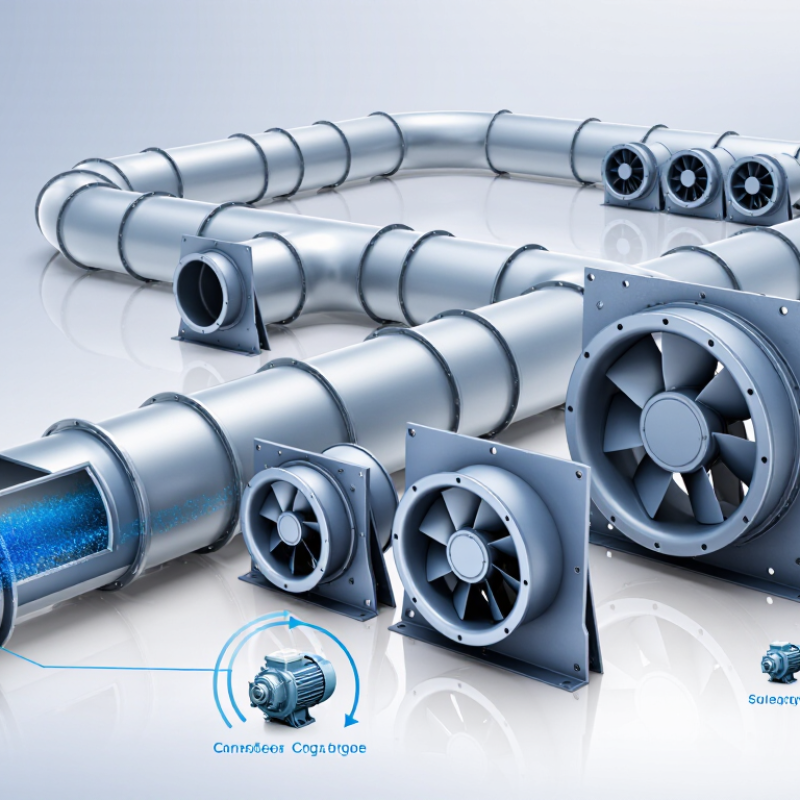
What Are the 2026 Top Axial Duct Fans for Global Buyers?

What Axial Duct Fans Are and How They Work

Axial duct fans move air along the same axis as the rotating impeller. Their blades push air forward through a cylindrical housing. The principle is simple. A motor turns the impeller, while the casing guides airflow into the duct.

In a typical installation, air enters through the rear grille and passes across the blades. The fan creates pressure that moves air through ducts, filters, dampers, and room outlets. Air volume is usually measured in cubic meters per hour or cubic feet per minute. Static pressure matters just as much. A fan may advertise strong airflow, yet perform poorly when a long duct or blocked filter increases resistance.

For global buyers, matching the fan to the actual duct system is essential. Check duct diameter, operating temperature, voltage, frequency, noise limits, and available maintenance space. A larger impeller is not automatically better. Oversized equipment can waste energy and produce uncomfortable drafts. Poorly sealed joints can also reduce delivered airflow.

From field experience, installation quality often matters more than a catalog rating. Keep the duct path as straight as possible near the fan. Use flexible connectors where vibration could transfer into walls. Confirm the airflow direction before commissioning. This step is easy to overlook. Fan selection also deserves honest review because laboratory figures may not match dusty, humid, or crowded job sites. Performance should be checked under real operating conditions, not assumed from one number.

Key Performance Factors for Global Fan Selection

What Are the 2026 Top Axial Duct Fans for Global Buyers?

Key Performance Factors for Global Fan Selection

For global buyers, a top axial duct fan starts with verified duty data, not a sales label. Define airflow, static pressure, temperature, operating hours, and duct resistance before comparing models. A fan moving 12,000 m³/h may fail if pressure loss was underestimated. It happens.

Check the fan curve at the real operating point. Ask for test conditions, tolerance ranges, and efficiency figures at several speeds. Motor efficiency matters, but total system power matters more. Variable-speed control can reduce energy use, though poor commissioning may create unstable airflow or unwanted noise. Measure sound near occupied areas, not only inside a laboratory. Shortcuts become expensive.

Material selection should match the site. Coated steel may suit dry interiors, while corrosion-resistant alloys or engineered polymers can perform better in humid environments. Confirm ingress protection, insulation class, temperature limits, and service access. Voltage and frequency must fit the destination grid. Electrical documentation should be clear and traceable. Request conformity evidence for the installation region, plus manuals in usable languages. Spare bearings, sensors, and impellers deserve attention too. A low purchase price is not always a low lifecycle cost. I have seen technically strong fans lose value because filters were ignored, access was cramped, or replacement parts arrived late. Selection should leave room for these uncomfortable questions.

Top Axial Duct Fan Types for 2026 Applications

What Are the 2026 Top Axial Duct Fans for Global Buyers?

Top Axial Duct Fan Types for 2026 Applications

In 2026, global buyers are comparing axial duct fans by application, pressure, efficiency, and maintenance needs. Selection should follow the operating point, not marketing claims. Tube axial fans suit warehouses, workshops, and general air replacement. Their straight airflow path supports high volume movement through short duct runs. Vane axial fans perform better when the system needs higher static pressure. Adjustable blades can also improve control during seasonal operation.

That detail matters.

For compact commercial ventilation, low-profile inline axial fans can fit above ceilings or inside narrow service spaces. An electronically commutated motor may reduce energy use during long operating hours. However, control compatibility, voltage, frequency, and replacement access require careful checking. Do not assume every efficient motor works with every controller. Mixed-flow designs can be a practical alternative where ducts are longer or resistance changes frequently. They are not purely axial, but buyers often compare them in the same project.

On industrial sites, temperature, dust exposure, vibration, and noise deserve equal attention. Before ordering, I check airflow at the actual static pressure, not only the free-air figure. Airflow charts should include test conditions and tolerances. I have seen installations underperform because filters became loaded within weeks. The quieter option may also move less air. Specifications can still mislead.

Reliable purchasing includes verified performance data, suitable enclosure protection, service clearance, and documented compliance with applicable regional requirements.

Regional Standards, Certifications, and Buying Requirements

For global buyers, the best axial duct fan is not defined by airflow alone.

Regional compliance can change the correct purchasing decision. In the European Union, buyers should check CE documentation, electromagnetic compatibility, electrical safety, and material restrictions. UK projects may require UKCA documentation. North American installations often request recognized safety certification, such as UL or CSA acceptance. Australia and New Zealand commonly require RCM compliance.

China may require CCC approval for applicable electrical products. Other markets can request local conformity marks, import documents, or national test reports. Requirements depend on voltage, motor type, installation environment, and end use. Do not assume one certificate works everywhere. It often does not.

Ask suppliers for a signed declaration of conformity, complete test reports, and the exact model covered. Request airflow and static-pressure curves at stated test conditions. Check noise values, IP rating, insulation class, thermal protection, operating temperature, and corrosion resistance. IEC 60529 references can help verify ingress protection claims. EMC results should match the actual controller and motor configuration.

A certificate alone proves little.

During sourcing, compare terminal design, cable length, mounting dimensions, spare-part access, and local service capability. I have seen buyers focus on maximum airflow, then discover poor performance after duct resistance is added. That mistake is easy to repeat. Require samples or witnessed testing when the project is critical, and review every document against the final shipping model.

How to Compare Suppliers, Costs, and Long-Term Value

What Are the 2026 Top Axial Duct Fans for Global Buyers?

Comparing axial duct fan suppliers requires more than checking airflow and price. Start with the duty point: required volume, static pressure, temperature, and operating hours. Ask for tested performance curves, sound data, motor efficiency, and vibration limits. A serious supplier should explain measurement conditions, not only provide attractive figures. Request material details for the housing, impeller, bearings, and protective coating. These parts face dust, moisture, and continuous rotation.

Supplier reliability becomes clearer through practical evidence. Check production quality records, inspection procedures, export experience, and replacement-part availability. Confirm whether technical support covers installation, balancing, controls, and troubleshooting. A low quote can look clever. It may not be. Freight, customs handling, accessories, commissioning, and energy use can quickly change the delivered cost. Compare the complete project cost, not just the fan invoice.

Long-term value depends on efficiency and maintainability. A slightly higher-efficiency motor may reduce electricity expenses across thousands of operating hours. Easy access to bearings, belts, terminals, and cleaning panels can also reduce shutdown time. Calculate expected maintenance intervals and warranty coverage in writing. I would still challenge every forecast; operating conditions rarely stay perfect. Dust loads change, filters clog, and airflow may be adjusted later. A realistic comparison includes those imperfect conditions, with clear assumptions and documented test results.